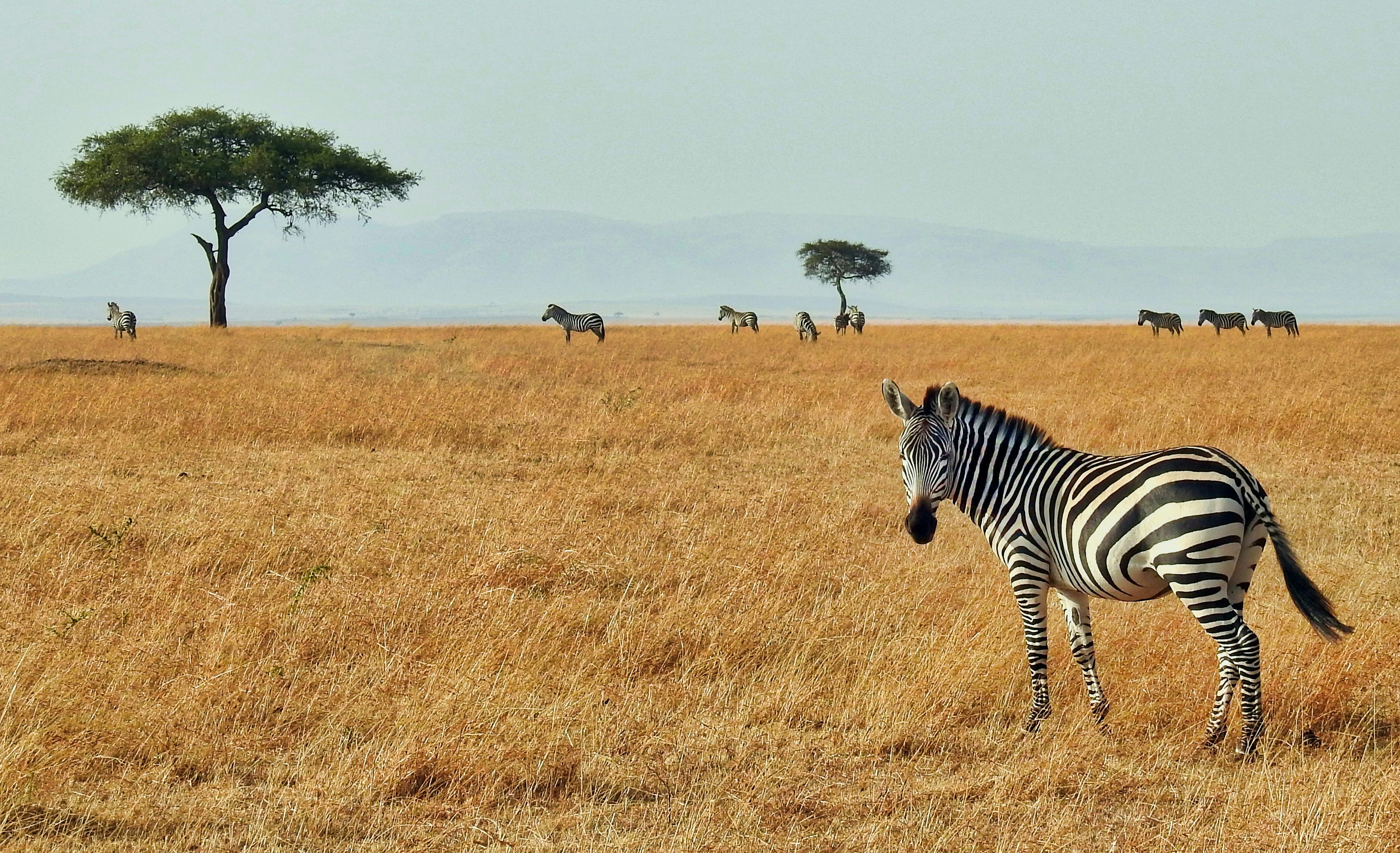
7-Day Kilimanjaro Lemosho Route
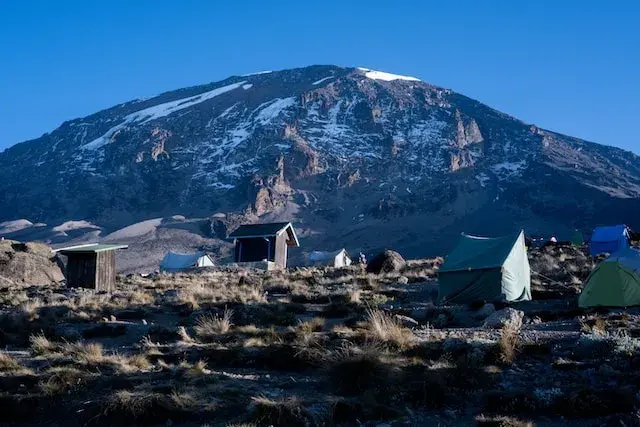
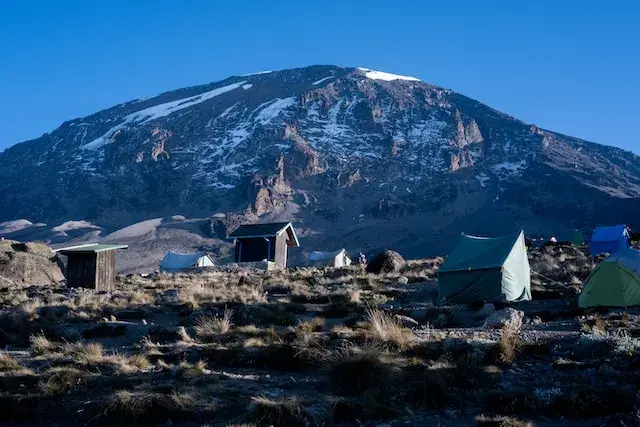
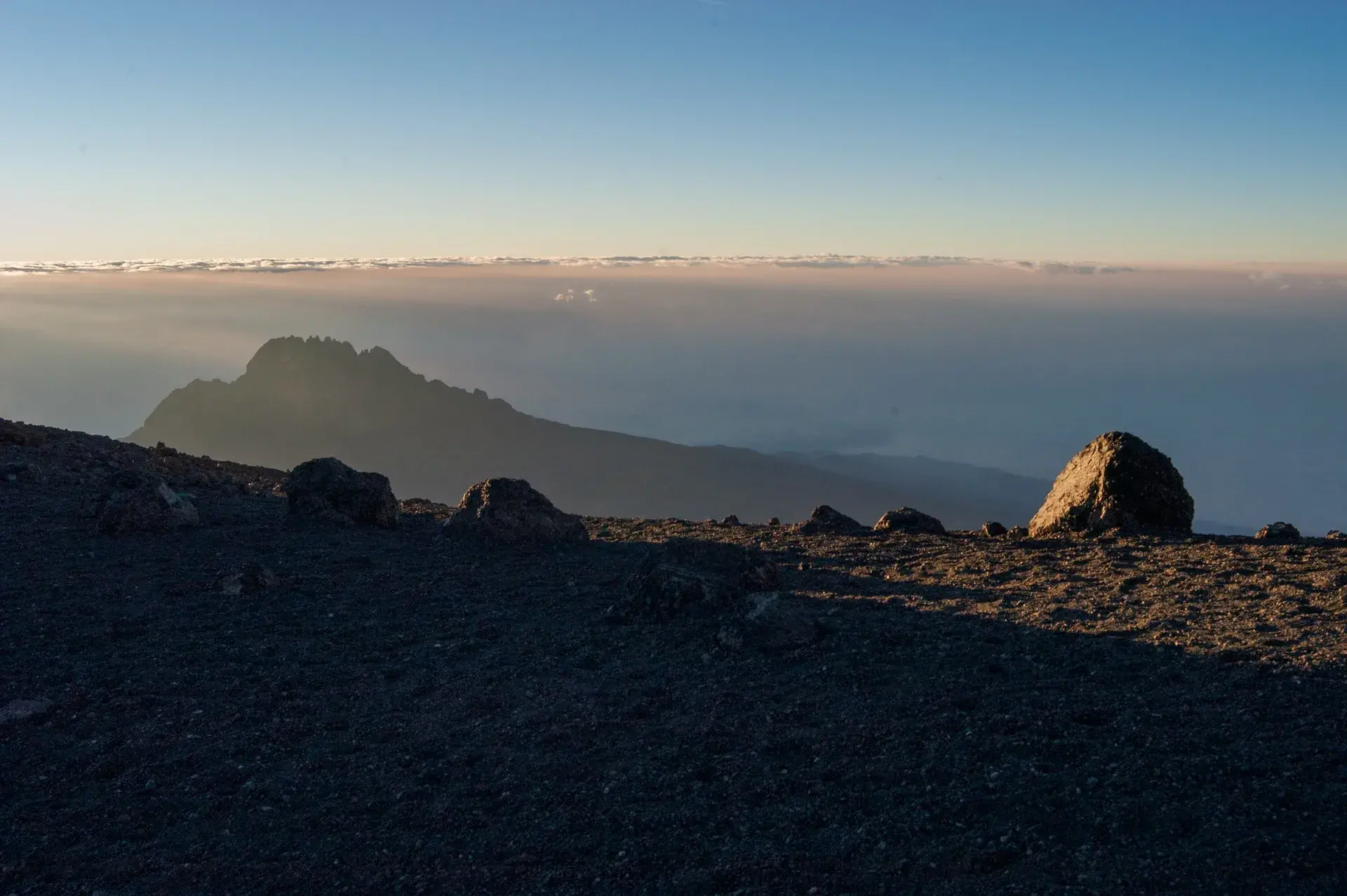
The Lemosho Route approaches Kilimanjaro from the remote western flank and is consistently ranked by guides as the finest way to the roof of Africa. Beginning deep in the Shira Plateau wilderness at Londorossi Gate (2,100 m) — far from the busier southern circuit gates — Lemosho delivers the mountain's most gradual altitude profile, its most pristine and uncrowded forests, and the longest acclimatization build of any standard Kilimanjaro itinerary. The route attracts fewer climbers than Machame or Marangu, meaning quieter camps and a more genuine wilderness experience from the very first day on the trail.
After crossing the open Shira Plateau — one of the largest volcanic calderas on Earth — the route merges with the southern circuit at Shira 2 Camp and follows the classic high-level traverse: a diversion via Lava Tower (4,630 m) for acclimatization before dropping to Barranco, the famous Barranco Wall scramble, a rapid traverse of the Karanga Valley, and a final ascent to Barafu Camp for the midnight summit push to Uhuru Peak at 5,895 metres, the highest point in Africa.
This 7-day itinerary — which begins the day after your arrival in Moshi — is the route's most popular schedule and already builds in a full \"climb high, sleep low\" acclimatization day at Lava Tower on Day 4 before descending to Barranco. The longer western approach through untouched forest adds two natural acclimatization days at the start of the climb that shorter routes simply cannot replicate, giving Lemosho its reputation as the route with the highest overall summit success rate. Your Africa Endless Cruising team — KINAPA-certified lead guide, assistant guides, mountain cook, and a full registered porter crew under our Fair Porter Policy — handles every tent, meal, and load from gate to gate.
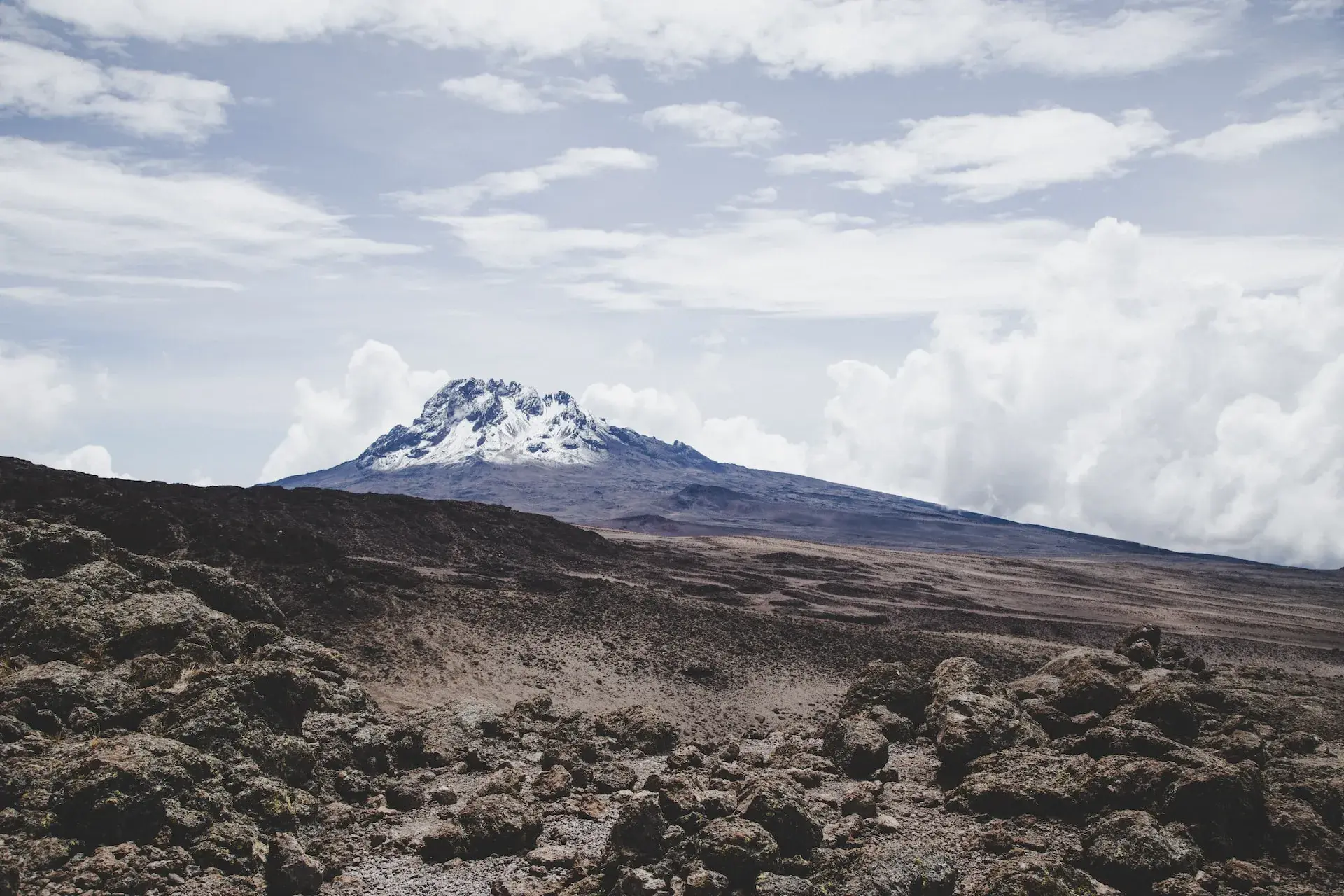
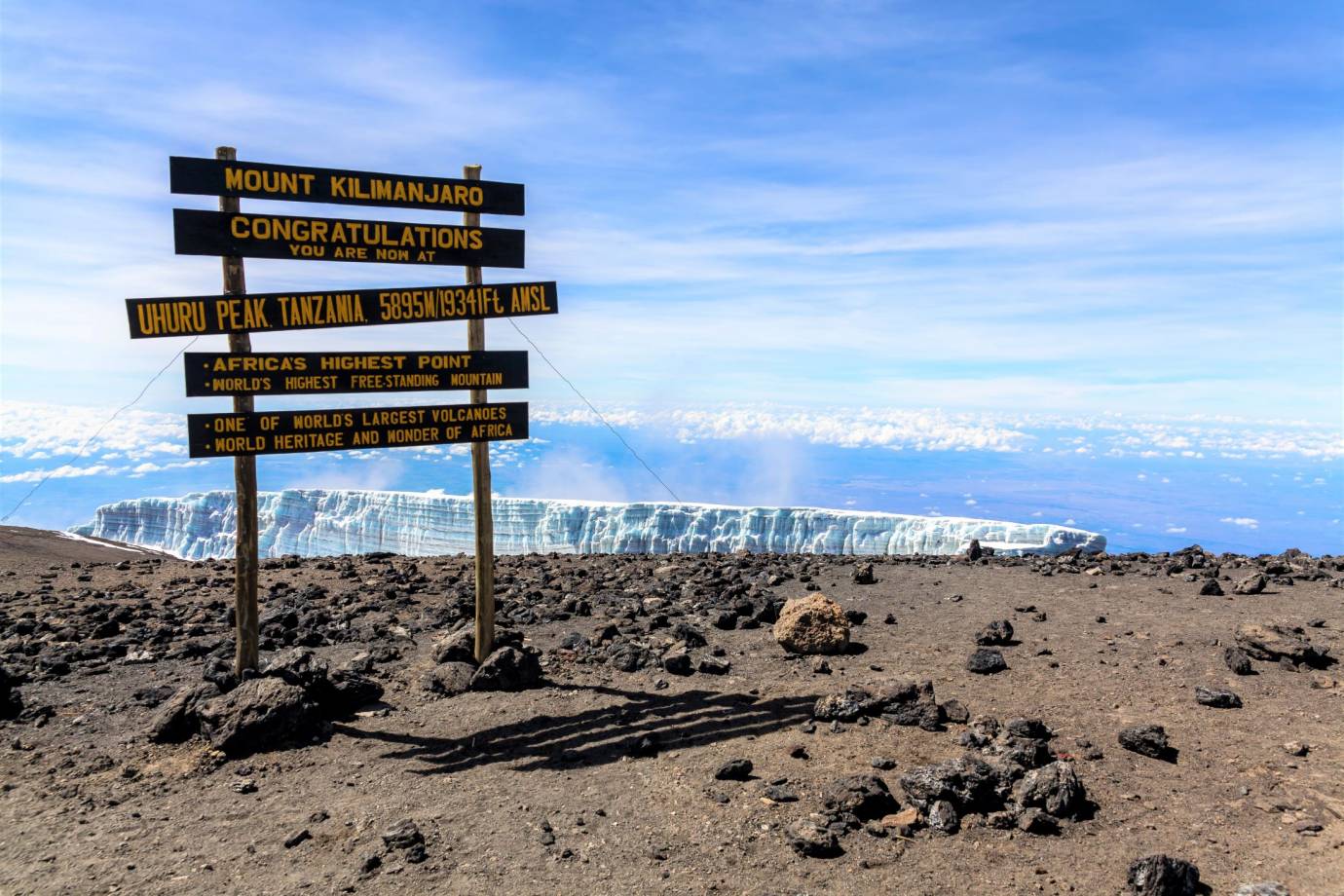
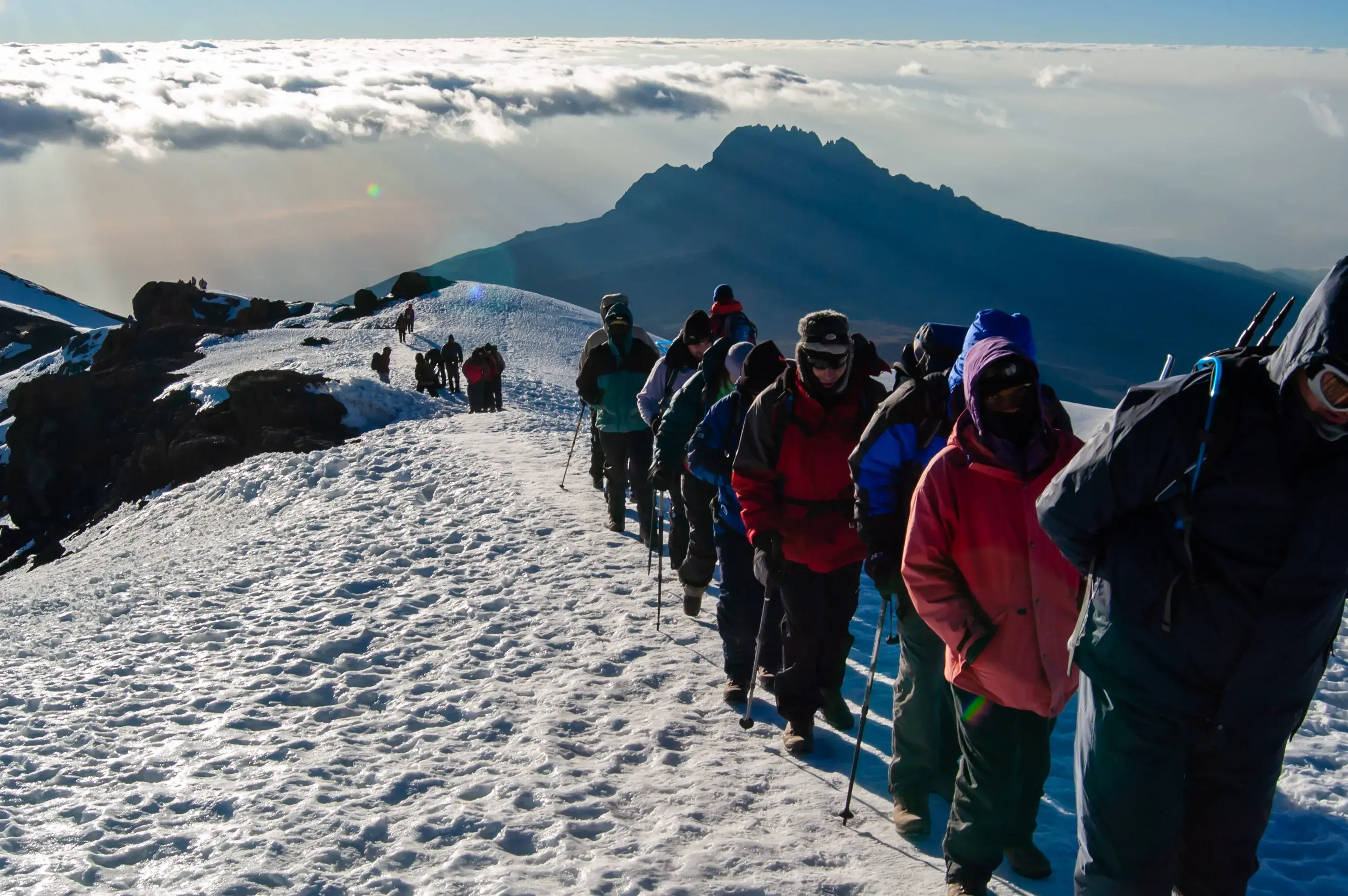
At 5,895 metres, Uhuru Peak on the rim of Kibo Crater is the highest point on the African continent and one of the Seven Summits. Arriving via Stella Point along the crater rim as the sun rises over the Mawenzi side of the mountain — glaciers catching the first gold light, a cloud sea stretching to every horizon — is an experience climbers describe for the rest of their lives.
Guides consistently rank Lemosho as the best overall Kilimanjaro experience. The remote western approach through barely-touched rainforest and montane heath, the solitude of the Shira Plateau before other routes arrive, and the gradual altitude gain set it apart. Every camp on this route offers a distinct and memorable landscape — from towering Hagenia forest on Day 1 to the open volcanic plateau on Day 3.
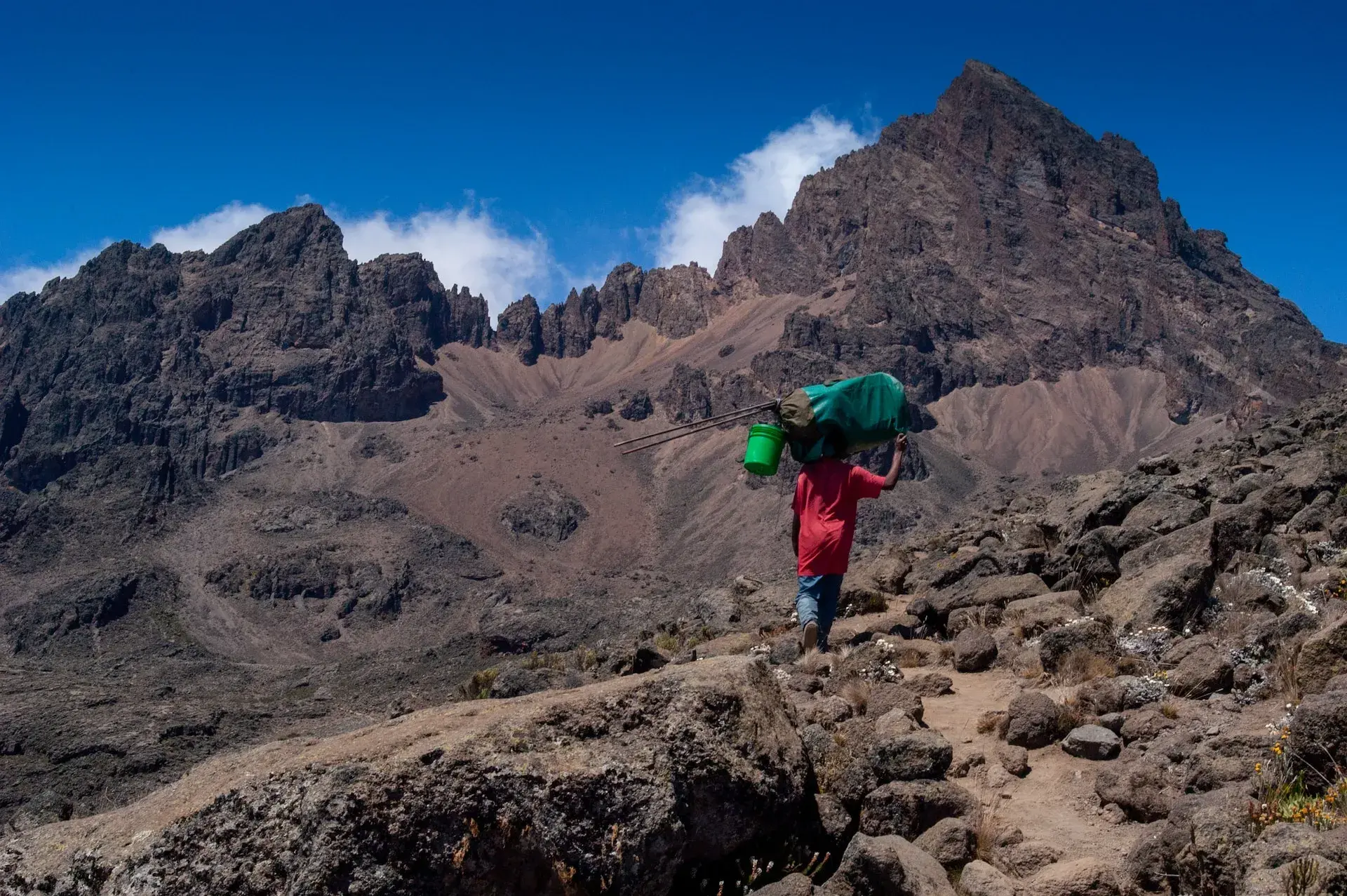
The 250-metre Barranco Wall looks intimidating from camp but is a non-technical, hands-on scramble that experienced guides navigate daily — including the famous "Kissing Rock" squeeze. No ropes or climbing gear required, just sure footing and a head for exposure. Reaching the top and turning around to see the full Karanga Valley laid out below is one of the most memorable moments of the climb.
Lemosho's western approach starts lower and climbs more gradually than any other major route, spending two nights below 3,500 m before gaining the Shira Plateau. Combined with the Lava Tower diversion on Day 4 — a classic \"climb high, sleep low\" day — this gives Lemosho the highest overall summit success rate of any standard Kilimanjaro itinerary, typically 90–95% with a competent guiding team.
Every Africa Endless Cruising Kilimanjaro climb is fully private — your group, your guide, your schedule. Your lead KINAPA-certified guide conducts daily health checks at every camp using a pulse oximeter and makes professional acclimatization decisions. A mountain cook prepares nutritionally designed altitude meals, and a full camping crew pitches and strikes your private camp at every site under our Fair Porter Policy.
Because Lemosho begins at a less accessible gate on the western slopes, it sees a fraction of the traffic on the popular southern-circuit gates. The first two days in the Shira Wilderness often feel entirely private — just your group, your crew, and one of the least-disturbed montane forests in Tanzania, complete with colobus monkeys, black-and-white casqued hornbills, and a cathedral-like canopy of ancient Hagenia trees.
Is this climb right for me?
Tour Seasons & Pricing
| Season | 1 Person | 2 Persons | 3 Persons | 4 Persons | 5 Persons | 6+ |
|---|---|---|---|---|---|---|
| Low Season Jan-Mar / Nov-Dec | $2,000 | $1,800 | $1,800 | $1,800 | $1,800 | On Request |
| Shoulder Season Apr-May / Oct | $2,000 | $1,800 | $1,800 | $1,800 | $1,800 | On Request |
| Peak Season Jun-Sep / 20 Dec-10 Jan | $2,100 | $2,000 | $2,000 | $1,900 | $1,900 | On Request |
Prices are per person in USD and may vary by season, group size, availability, and route arrangements.
Day-by-Day Itinerary
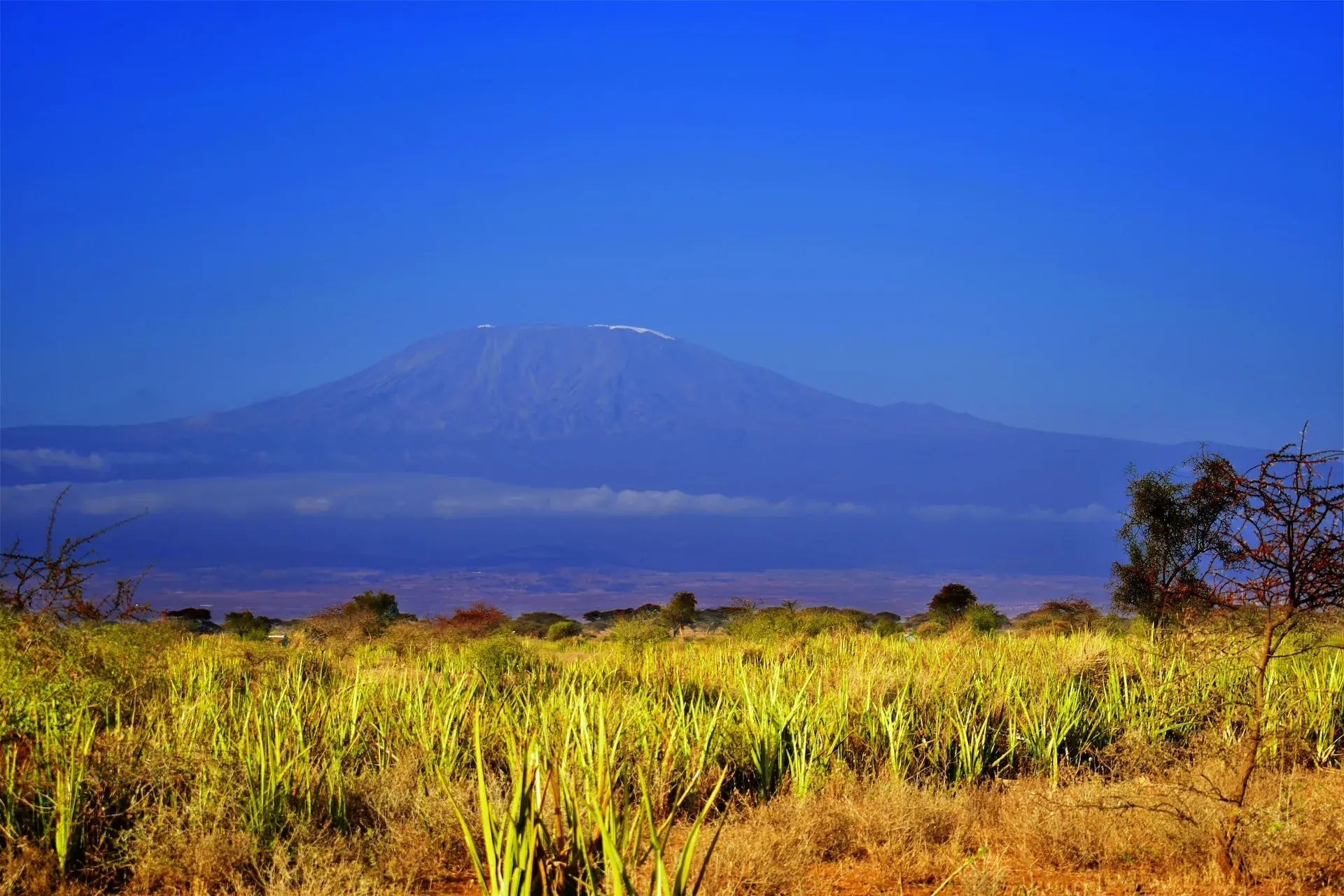
Your Kilimanjaro journey begins when you land at Kilimanjaro International Airport (JRO). A Africa Endless Cruising driver will be waiting at arrivals, and the transfer to Moshi takes about 45 minutes through coffee and banana plantations at the mountain's foot. On a clear day, the white-capped dome of Kibo rising above the town gives the first real sense of scale for what lies ahead.
After settling into your hotel, your lead guide joins you for the pre-climb briefing — covering the Lemosho route day by day, the two-hour transfer to Londorossi Gate on Day 1, the acclimatization strategy built into the schedule, mandatory gear review, and the daily health-check protocol. Because the Lemosho Gate requires a longer drive than the southern circuit gates, your guide will also walk through the Day 1 logistics to ensure an early start.
The evening is yours. Moshi has excellent restaurants within easy reach of the main hotels. An early night is strongly encouraged — Day 1 begins with an approximately two-hour drive to Londorossi Gate on the western side of the mountain.
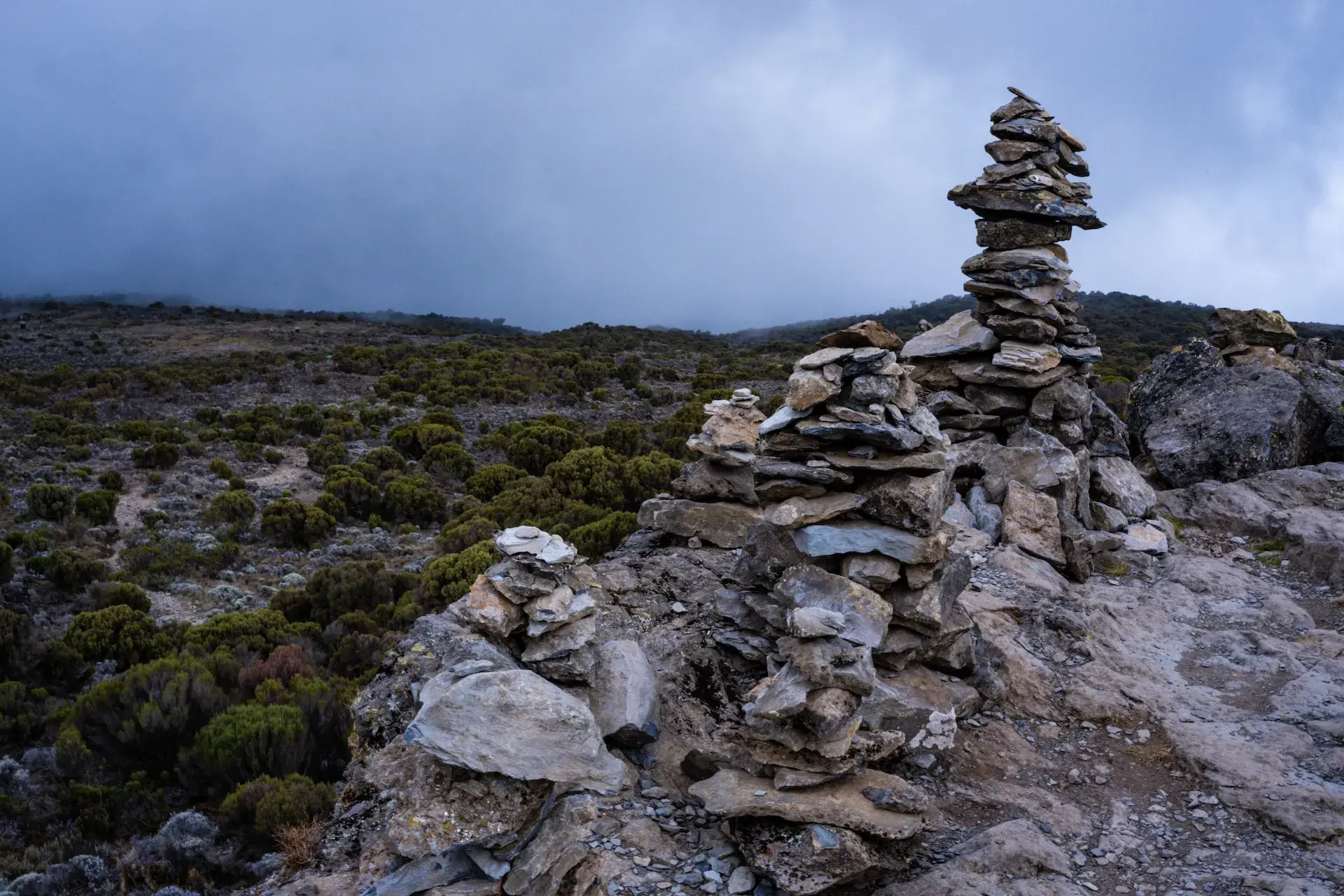
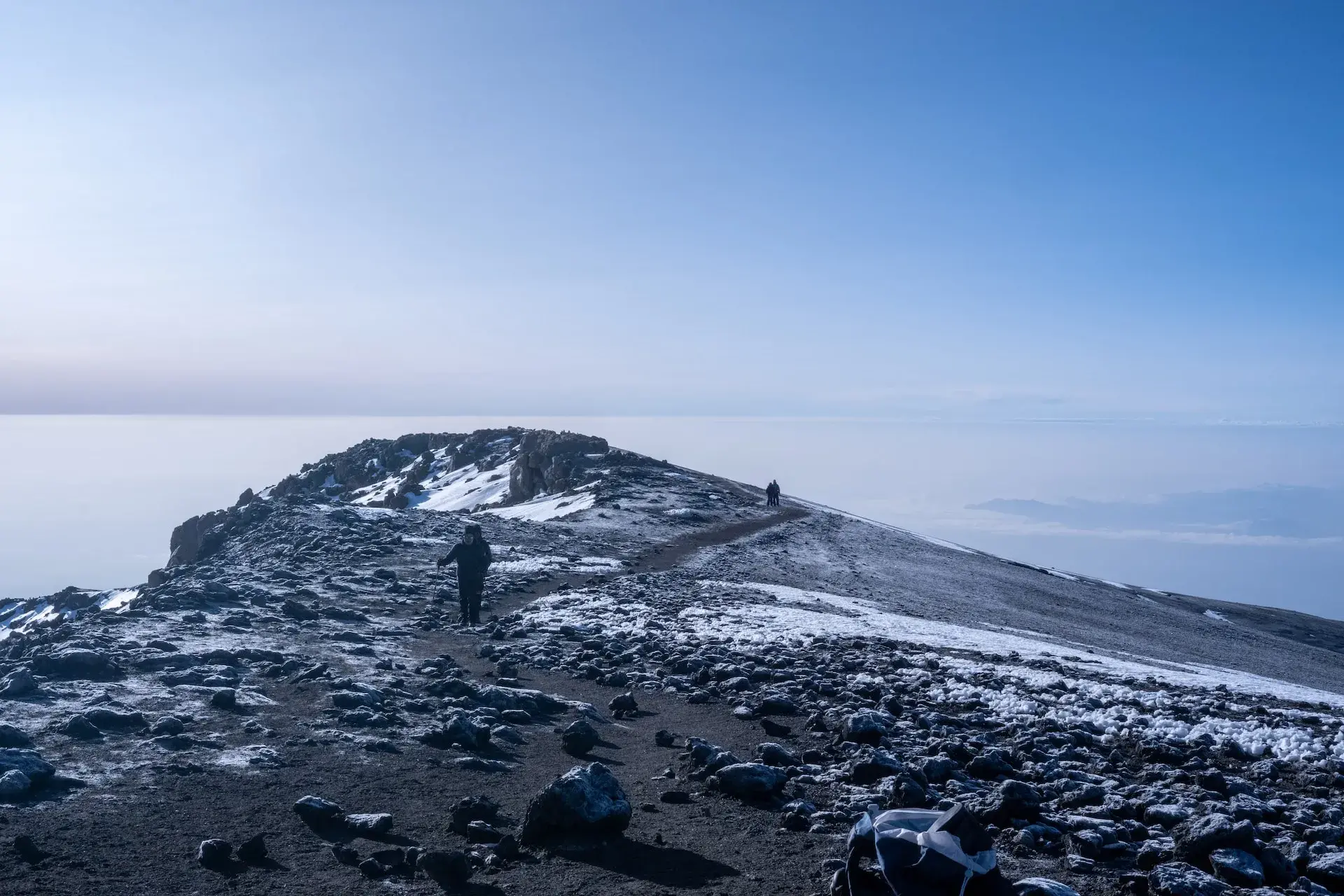
The drive from Moshi to Londorossi Gate (2,100 m) on the western flank of the mountain takes approximately two hours, passing through lowland farmland and climbing into the less-visited Shira Wilderness. Londorossi is a small, unhurried gate compared to the busier southern entrances — KINAPA rangers process permits and weigh porter loads at a pace that sets the tone for what is genuinely one of Africa's more remote mountain approaches.
The trail enters one of Kilimanjaro's most undisturbed sections of montane rainforest almost immediately. Ancient Hagenia trees with thick, moss-covered boughs form a cathedral canopy draped in lichen, and the forest floor is rich with fern and impatiens. Colobus monkeys are frequently spotted in the upper canopy, and elephant, buffalo, and leopard are all present in this section — your guide briefs you on wildlife awareness before entering. Because Lemosho is quieter than the southern routes, sightings here are not uncommon.
Day 1 is the shortest walking day of the entire route — a gentle, relatively low-altitude introduction designed to let legs and lungs settle in before the bigger climbs ahead. Big Tree Camp (2,650 m), named for the enormous Hagenia specimens that shade the campsite, is already prepared by your crew on arrival: tents pitched, dining tent up, hot drinks waiting. Sleep here is easy and deeply restful — the ideal way to start a Kilimanjaro climb.
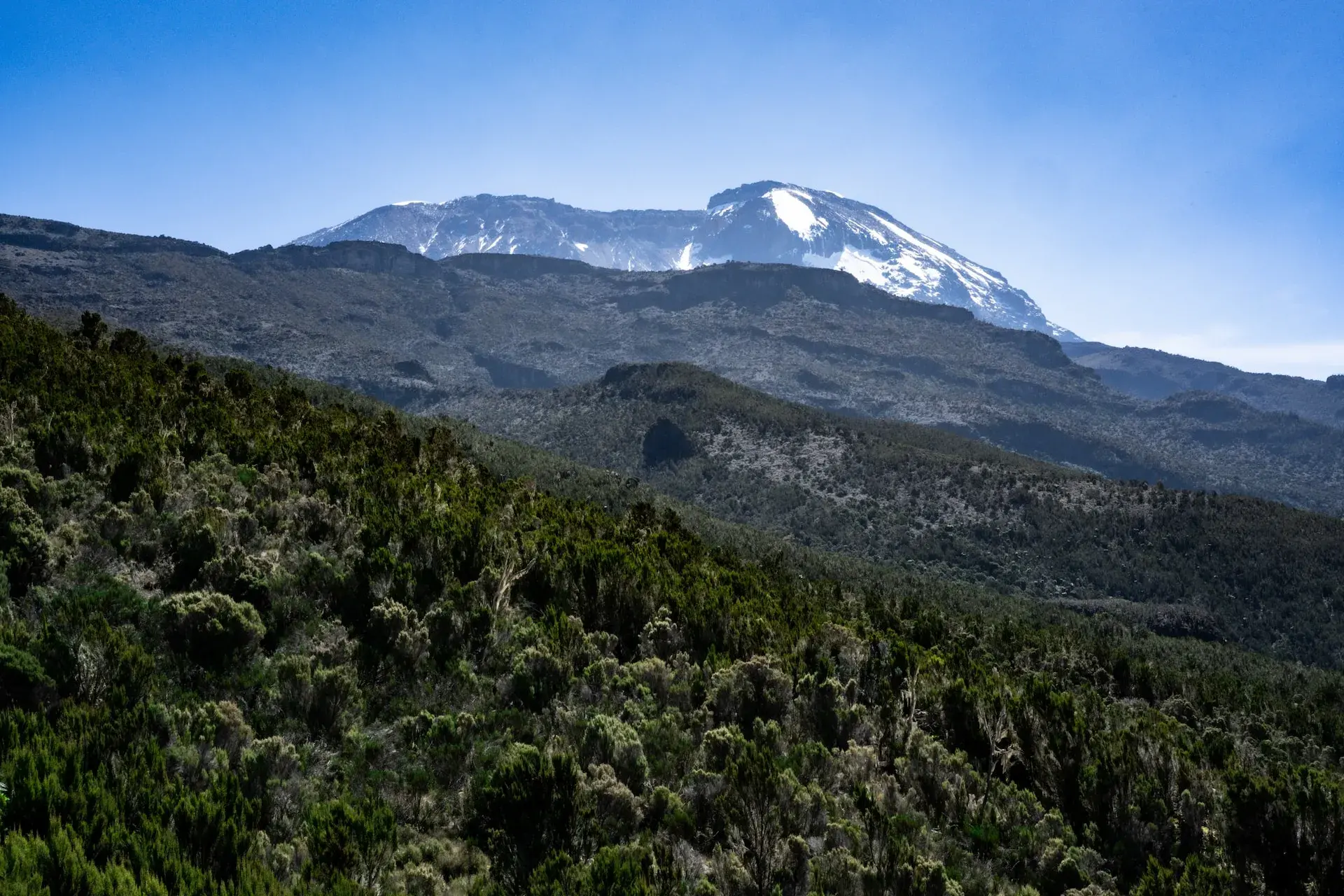
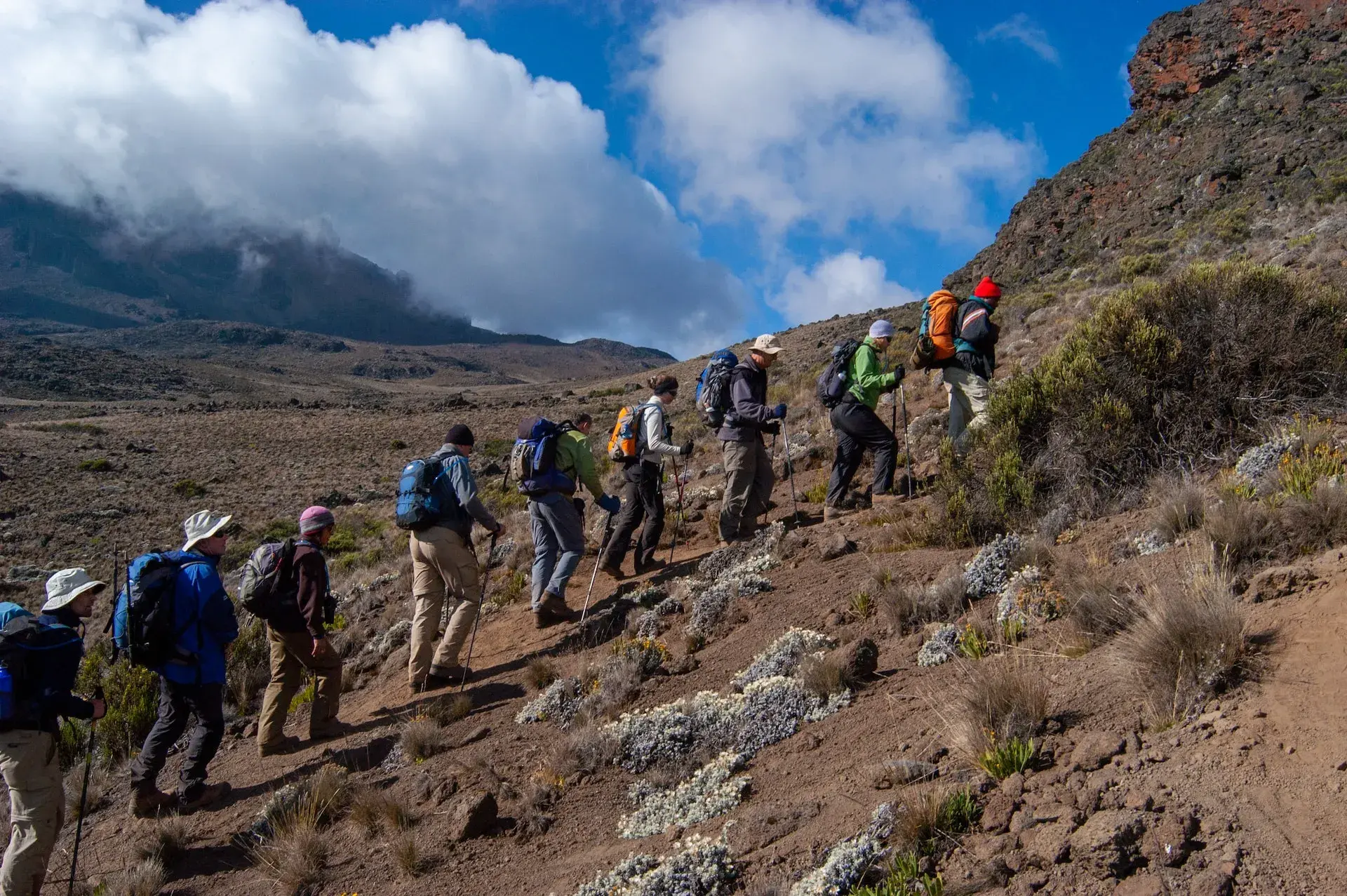
Day 2 climbs steadily out of the rainforest and into the open heath and moorland zone — the forest canopy thins and then gives way to giant heather and everlasting flowers, with increasingly wide views opening to the west and south. The trail is well-graded and rewarding underfoot, offering one of the most pleasant transition days of any Kilimanjaro route as the landscape changes almost by the hour.
By midday the western edge of the Shira Plateau comes into view — the remnant caldera floor of one of Kilimanjaro's three original volcanic cones. Unlike climbers on Machame, who arrive at Shira 2 from the south, Lemosho climbers approach the plateau from the west via Shira 1 Camp, the earlier of the two plateau campsites. This means a full afternoon on the western plateau with Kibo's glaciated dome to the east and the vast African plains far below — one of the quietest, most spectacular sections of any Kilimanjaro route.
Shira 1 Camp (3,500 m) is exposed and windswept but the views are extraordinary. Your guide conducts the evening health check and explains tomorrow's short traverse to Shira 2, which includes an optional acclimatization detour to the striking Shira Cathedral rock formation.
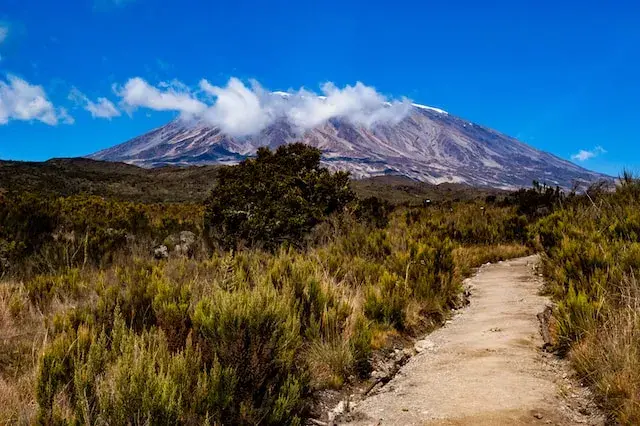
Day 3 is the most leisurely walking day of the route, a gentle plateau traverse from Shira 1 east to Shira 2 with an optional detour to the Shira Cathedral — a striking volcanic rock formation rising from the open moorland and one of Lemosho's defining landmarks. The optional hike to the Cathedral adds 2–3 hours but is a genuinely rewarding acclimatization walk with panoramic views in all directions.
The Shira Plateau itself is one of the most dramatic high-altitude landscapes in Africa — rolling moorland dotted with volcanic rock and everlasting flowers, stretching for kilometres in a near-silence broken only by the wind. Kibo's summit dome grows noticeably larger as you cross the plateau from west to east, and the contrast between the barren rock near camp and the vast plains visible 3,000 metres below creates a persistent sense of being genuinely high and remote.
Shira 2 Camp (3,840 m) is the plateau's main campsite and the point where Lemosho joins the southern circuit route used by Machame and Rongai climbers coming from other directions. Your guide explains tomorrow's key acclimatization day: the long traverse via Lava Tower — Lemosho's most important \"climb high, sleep low\" moment.
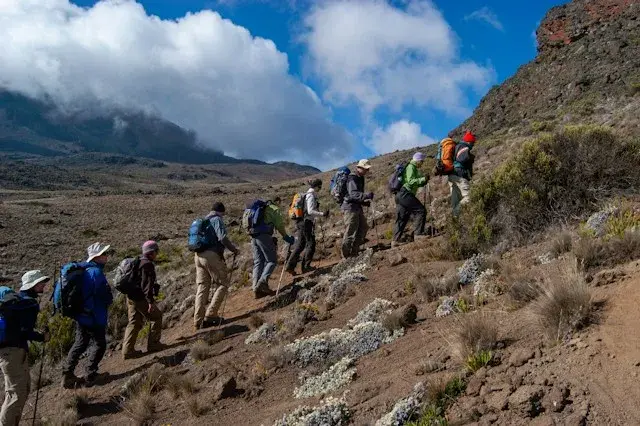
Day 4 is the most important acclimatization day on the entire Lemosho Route. The trail climbs steadily out of Shira's moorland into stark alpine desert — bare volcanic rock, dust, and almost no vegetation — toward the dramatic volcanic plug of Lava Tower (4,630 m), which rises nearly 300 metres above the surrounding plateau like a fortress. The approach takes 3–4 hours, and the altitude is genuinely felt here for the first time by most climbers.
Lunch is taken at the foot of Lava Tower, at almost the same altitude as Kibo Hut on the Marangu Route — a deliberate exposure that stimulates your body's red blood cell production well ahead of summit night. Then, instead of camping at this altitude, the trail descends sharply through a dramatic change of scenery into the giant senecio and lobelia forest above Barranco Camp. This \"climb high, sleep low\" profile is one of the key reasons Lemosho carries such a high overall summit success rate.
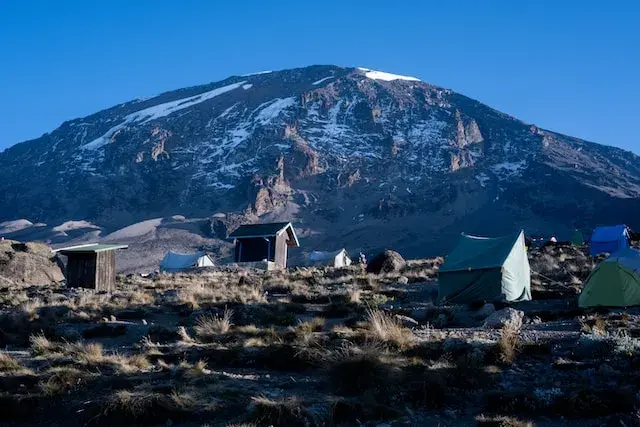
Barranco Camp (3,960 m) sits in a sheltered valley directly beneath the imposing face of the Barranco Wall, with views back up to Kibo's southern ice fields. It is one of the most scenic campsites on the mountain, and most climbers sleep noticeably better here than they did at Shira — proof that the day's diversion did exactly what it was designed to do.
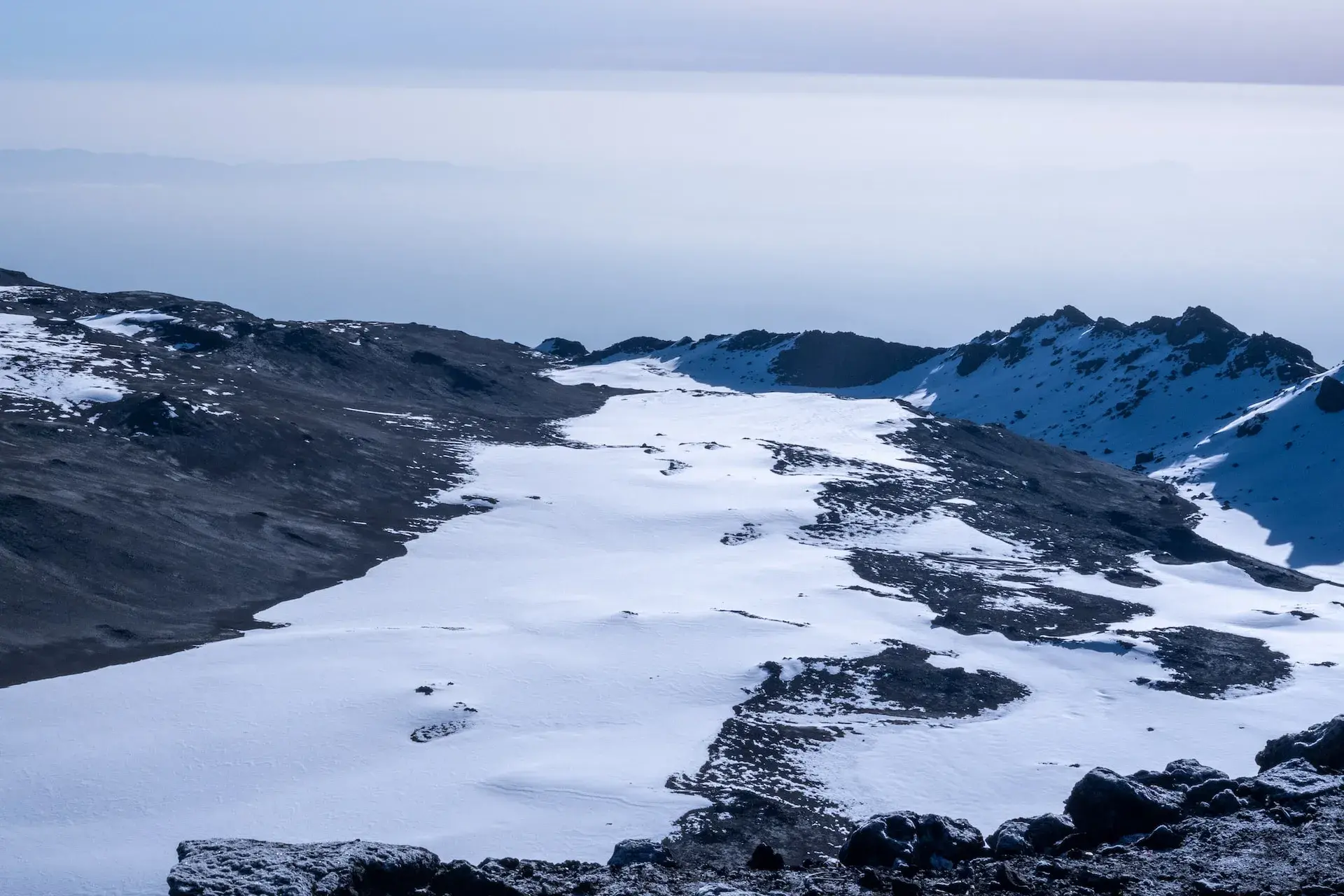
Day 5 is the longest and most varied walking day of the route, combining the route's signature scramble with the full Karanga Valley traverse and the climb to summit base camp. It begins with the Barranco Wall — a 250-metre near-vertical-looking rock face that is in fact a straightforward, non-technical scramble used by guides every single day of the season, including the famous \"Kissing Rock\" squeeze. Hands-on sections require careful footing rather than climbing skill, and porters carrying full loads move up it with practiced ease.
From the top of the Wall, the trail undulates across a series of ridges and valleys into and out of the Karanga Valley — the last reliable water source before the summit — where a short rest and lunch stop allows legs to recover before the final push toward Barafu. Kibo's southern glaciers are a constant, looming presence to the north as the trail gains altitude through stark alpine desert.
Barafu Camp (\"ice\" in Swahili), perched on a narrow, wind-exposed ridge at 4,673 m, is reached by late afternoon. The mood here shifts noticeably — this is summit base camp. The afternoon is dedicated entirely to preparation: an early, high-carbohydrate dinner, laying out summit clothing, and being horizontal before dark. Your guide delivers the final summit briefing. Wake-up is at 23:00.
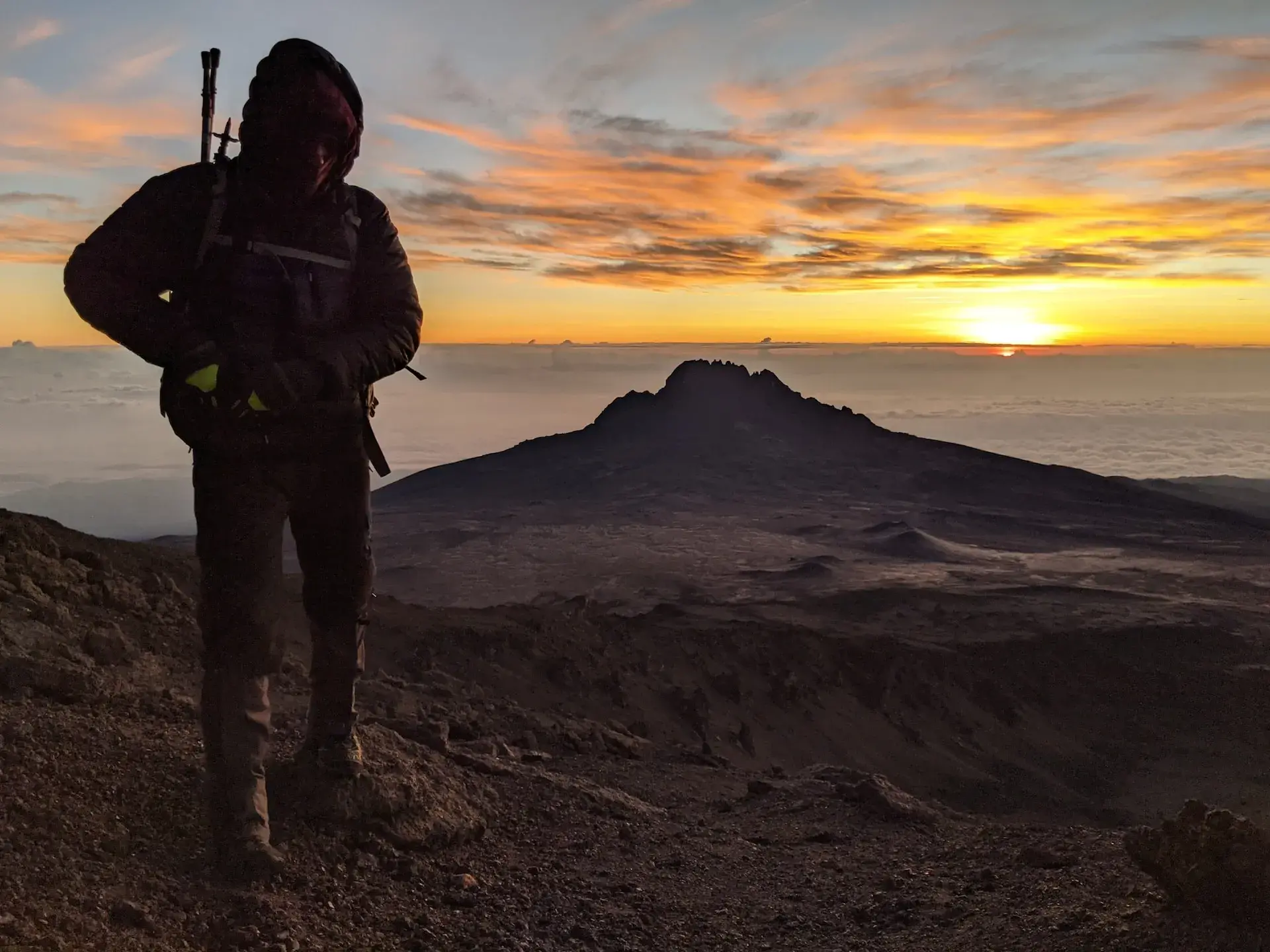
Around midnight, dressed in full summit layers — base layer, mid layer, down jacket, windproof shell, insulated trousers, balaclava, two pairs of gloves, gaiters — you step out into temperatures of −10°C to −20°C and a sky thick with stars. The ascent from Barafu follows long switchbacks up loose scree toward Stella Point (5,756 m) on the crater rim, the hardest single section of the climb. Your guide keeps the pace to a controlled shuffle, with deliberate pauses to breathe every few steps; oxygen saturation at this altitude runs at roughly half of sea-level pressure.
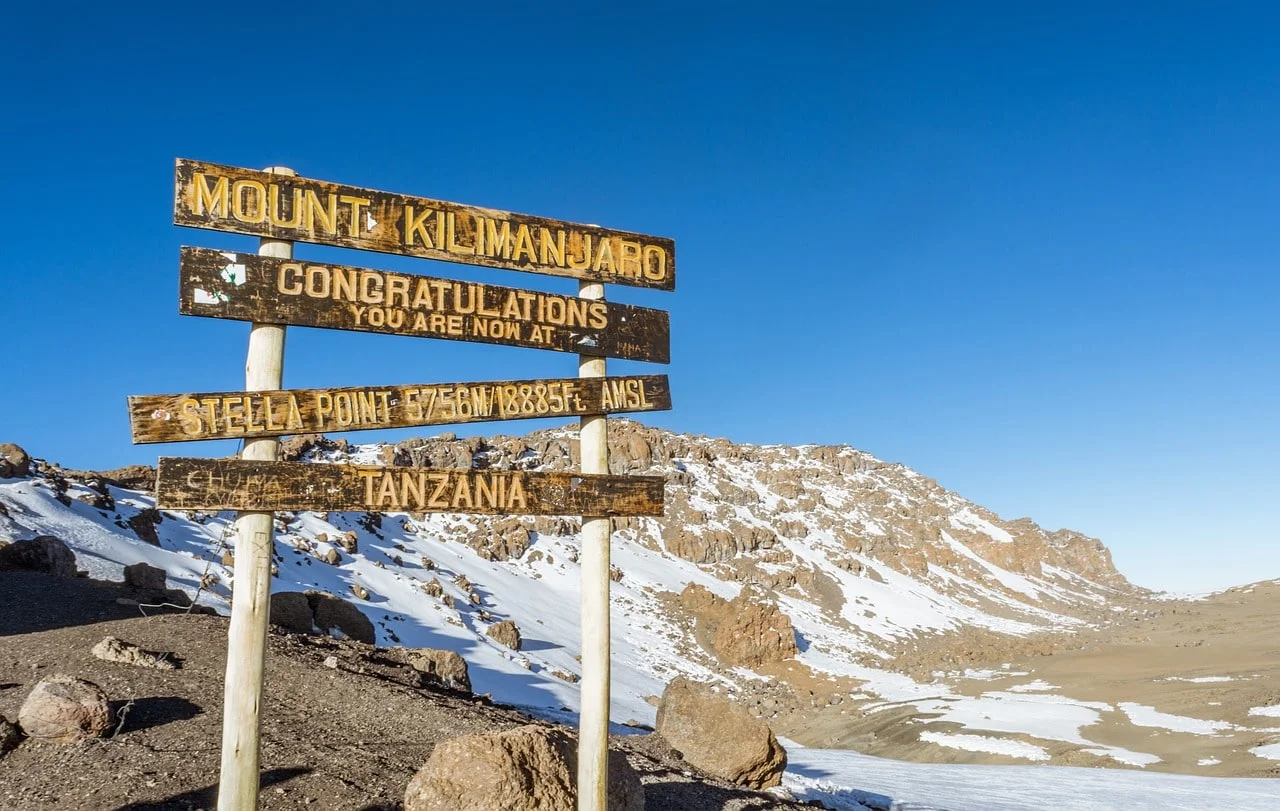
Regular stops allow your guide to check for warning signs of HACE and HAPE — confusion, loss of coordination, severe vomiting — and anyone showing them is descended immediately by an assistant guide while the rest of the group continues. Stella Point itself arrives as a quiet, almost anticlimactic moment after hours of effort: a wooden sign on the crater rim, with the vast Kibo crater and the Furtwängler Glacier opening up ahead in the pre-dawn dark.
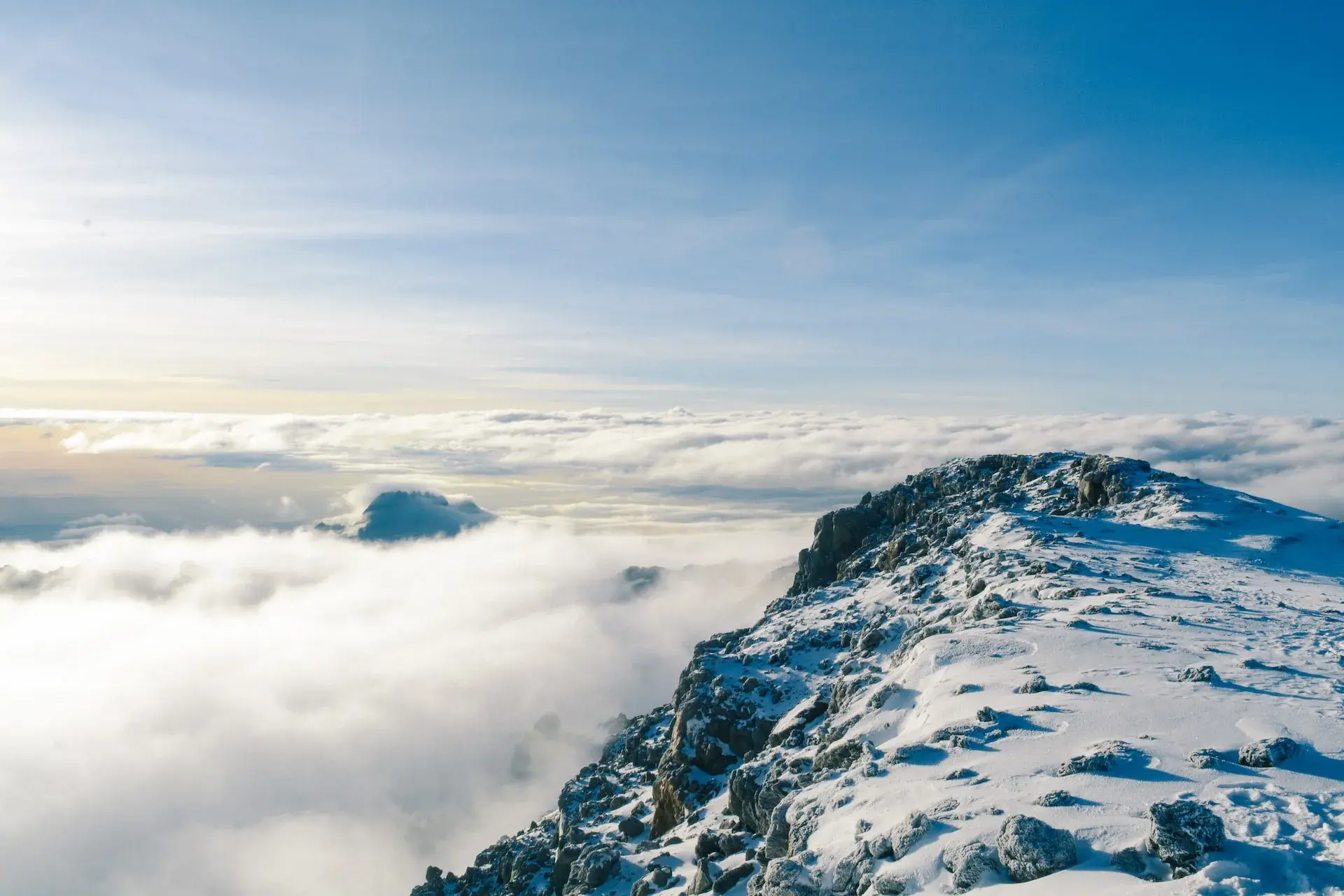
From Stella Point, the trail follows the crater rim for roughly 45 minutes to Uhuru Peak (5,895 m), timed so that the sky lightens over Kenya as you walk. The glaciers catch the first gold light, and then the summit sign appears — the highest point in Africa, with a cloud sea stretching to every horizon below. Most groups spend 15–30 minutes at the top before the cold makes a longer stay impractical.
The descent is long but exhilarating — loose scree allows a fast, skidding pace back to Barafu (2–3 hours) for a hot breakfast and a short rest, before continuing down through alpine desert and moorland all the way to Mweka Camp (3,100 m) in the upper rainforest. It is a genuinely long day — most groups arrive at Mweka in the late afternoon, exhausted but elated, for an early, well-earned dinner and sleep.
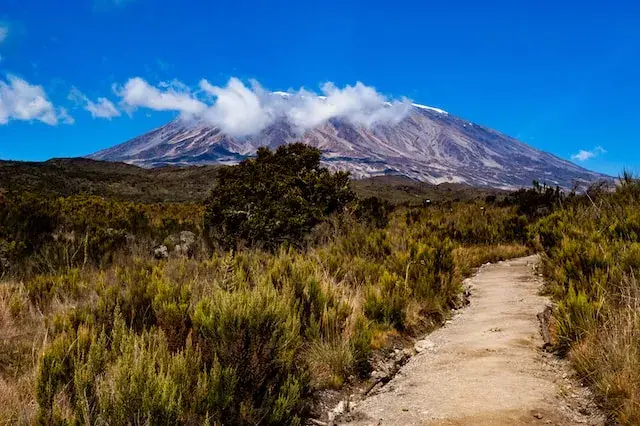
The final morning on the mountain is a gentle, sociable descent through thick rainforest back to civilisation. The trail is steady underfoot, the air warms with every metre lost, and the relief of summit night fully settles in as the forest closes back overhead — fewer than 36 hours after you walked through a different section of the same kind of canopy on the western approach.
At Mweka Gate (1,640 m), KINAPA rangers record your descent and process summit certificates. The porters line up for the traditional farewell circle, where your guide introduces each crew member by name — the moment to thank and tip them individually for carrying everything that made the climb possible. From there it's a short drive back to your Moshi hotel for a long-awaited hot shower, followed by a celebration dinner where your guide presents your official summit certificates.
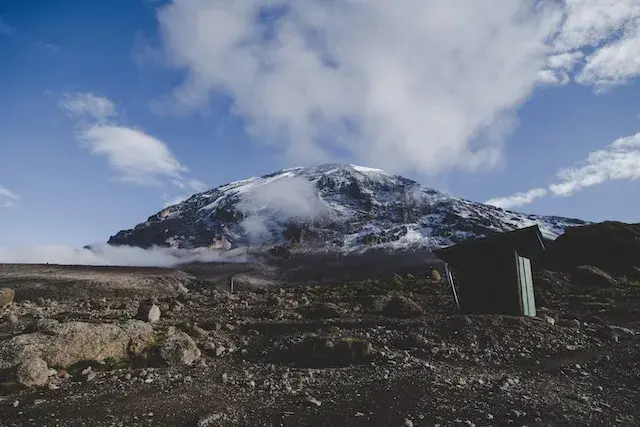
The final morning in Moshi is yours to enjoy at a pace that feels luxurious after a week on the mountain. Sleep in, take a slow breakfast on the hotel terrace, and — on a clear morning — look up at Kibo's summit knowing exactly what it took to stand on it.
Your private transfer to Kilimanjaro International Airport (JRO) departs timed precisely to your flight. Our team coordinates luggage collection, hotel checkout, and your onward journey so the logistics stay invisible. If time allows, Moshi's old town market and the Kilimanjaro Coffee Estate tour are both worth a final half-day.
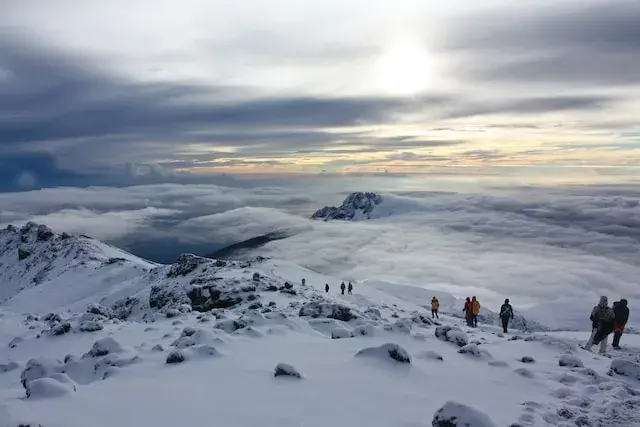
The remote western approach — Kilimanjaro's finest route to the roof of Africa.
What's Included & Excluded
Included in Your Climb
Your lead guide holds a current, active Kilimanjaro National Park Authority (KINAPA) guiding licence and has a minimum of 8 years' experience on the mountain. All Africa Endless Cruising Kilimanjaro guides are Wilderness First Aid certified and carry supplemental oxygen for emergencies.
- Daily pulse-oximeter health checks at every camp (morning and evening)
- Fluent English; Swahili and basic German/French available on request
- Supplemental oxygen cylinder carried on all climbs above Barranco
- Stretcher and emergency evacuation coordination authority
- One assistant guide per 3 climbers (larger groups receive more)
Each climber is allocated a personal porter for their main duffel bag (max 15 kg). All group equipment — tents, food, cooking gear, emergency supplies — is carried by additional registered porters. A dedicated mountain cook prepares all meals on-mountain. Every porter on a Africa Endless Cruising climb is registered with KINAPA, carries a maximum regulated load, is provided with proper warm equipment for the altitude, and is paid under our Fair Porter Policy — a wage structure above the Kilimanjaro Porters Assistance Project minimum.
All Kilimanjaro National Park entrance fees, campsite fees at every camp, crew camping fees, and the mandatory KINAPA Rescue Fund levy are pre-paid in full and included in your tour price. There are no additional charges at the gate and no surprise fees during the climb.
Lemosho is a fully tented route with no permanent huts at any point, so all camping equipment is included: private 4-season mountain tents (2-person tents used for solo occupancy on request), a dedicated dining tent, mess table and chairs, foam sleeping mats, and a private camp toilet tent. You do not need to bring a tent, mat, or toilet tent yourself — just your personal sleeping bag (rental available).
Your mountain cook provides a hot breakfast, packed or hot lunch, and a three-course dinner in your private dining tent at every camp. Meals are high-calorie, high-carbohydrate, and nutritionally designed for altitude performance. Dietary requirements (vegetarian, vegan, gluten-free, halal) are catered for with advance notice. Unlimited hot drinks (tea, coffee, cocoa, ginger water) are available at every camp throughout the day.
One night's hotel accommodation in Moshi before the climb (arrival night) and one night on descent (Day 7 return) are both included in the tour price. The hotel is a comfortable, centrally located property with en-suite rooms, hot water, luggage storage for bags left during the climb, and a terrace with Kilimanjaro views on clear mornings. Dinner is included on the arrival night; breakfast and celebration dinner are included on the descent night.
Return private vehicle transfers between Kilimanjaro International Airport (JRO) and your Moshi hotel, and between Moshi and Londorossi Gate / Mweka Gate (ascent and descent days), are included. The drive to Londorossi on the western side takes approximately two hours. Vehicle is a clean, air-conditioned 4×4 or minivan depending on group size.
All climbers who reach Stella Point (5,756 m) on the crater rim receive a Stella Point certificate. Those who continue to Uhuru Peak (5,895 m) receive the full Uhuru Peak summit certificate — printed on high-quality paper, signed by KINAPA, and dated with your summit day. These are presented by your guide at Mweka Gate on descent, and are available in framed versions through Africa Endless Cruising on request.