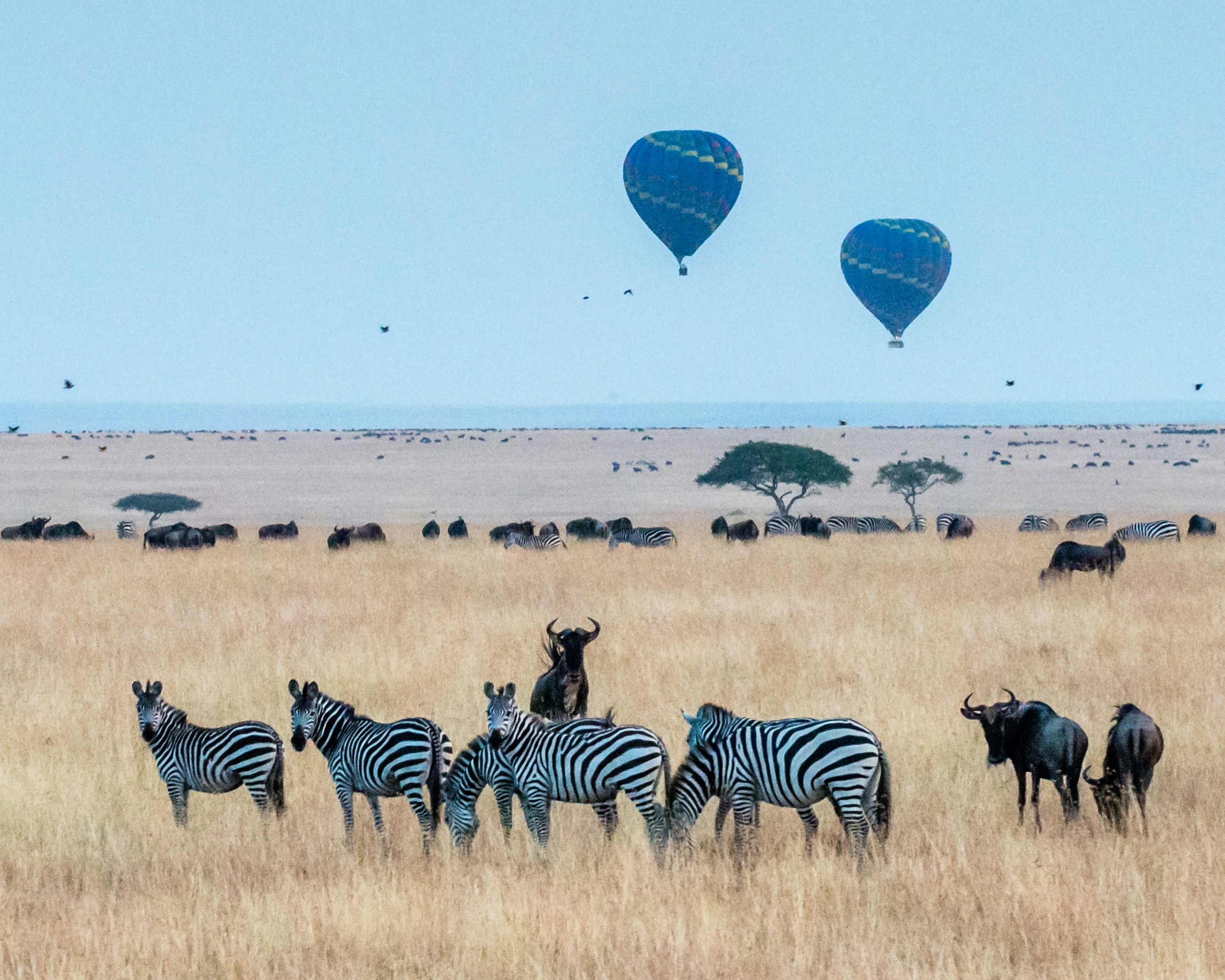
8-Day Kilimanjaro Northern Circuit Route
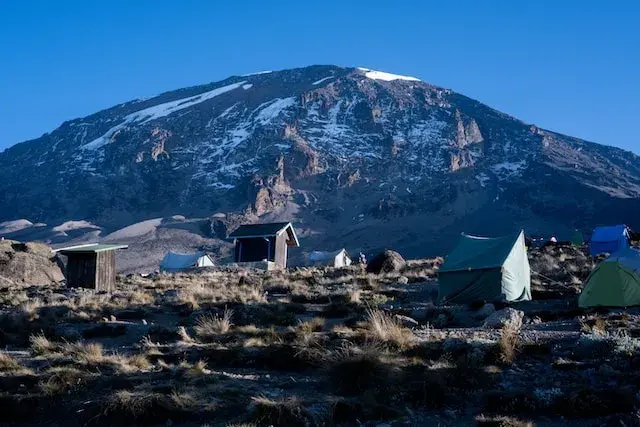
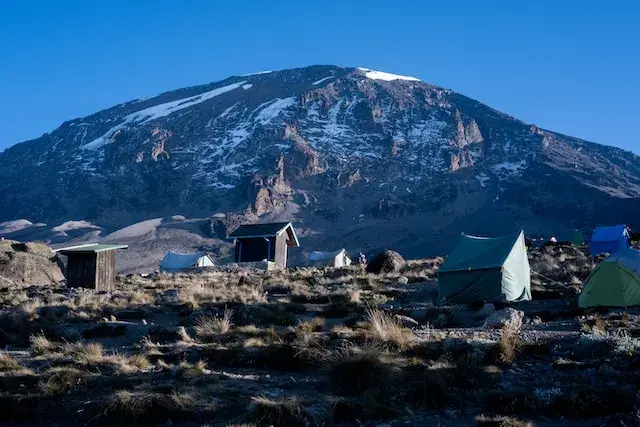
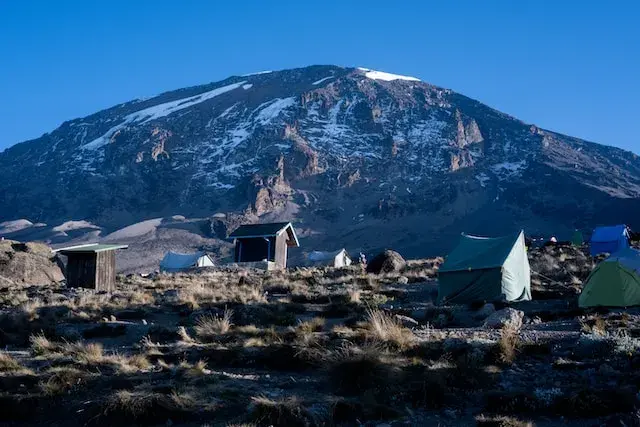
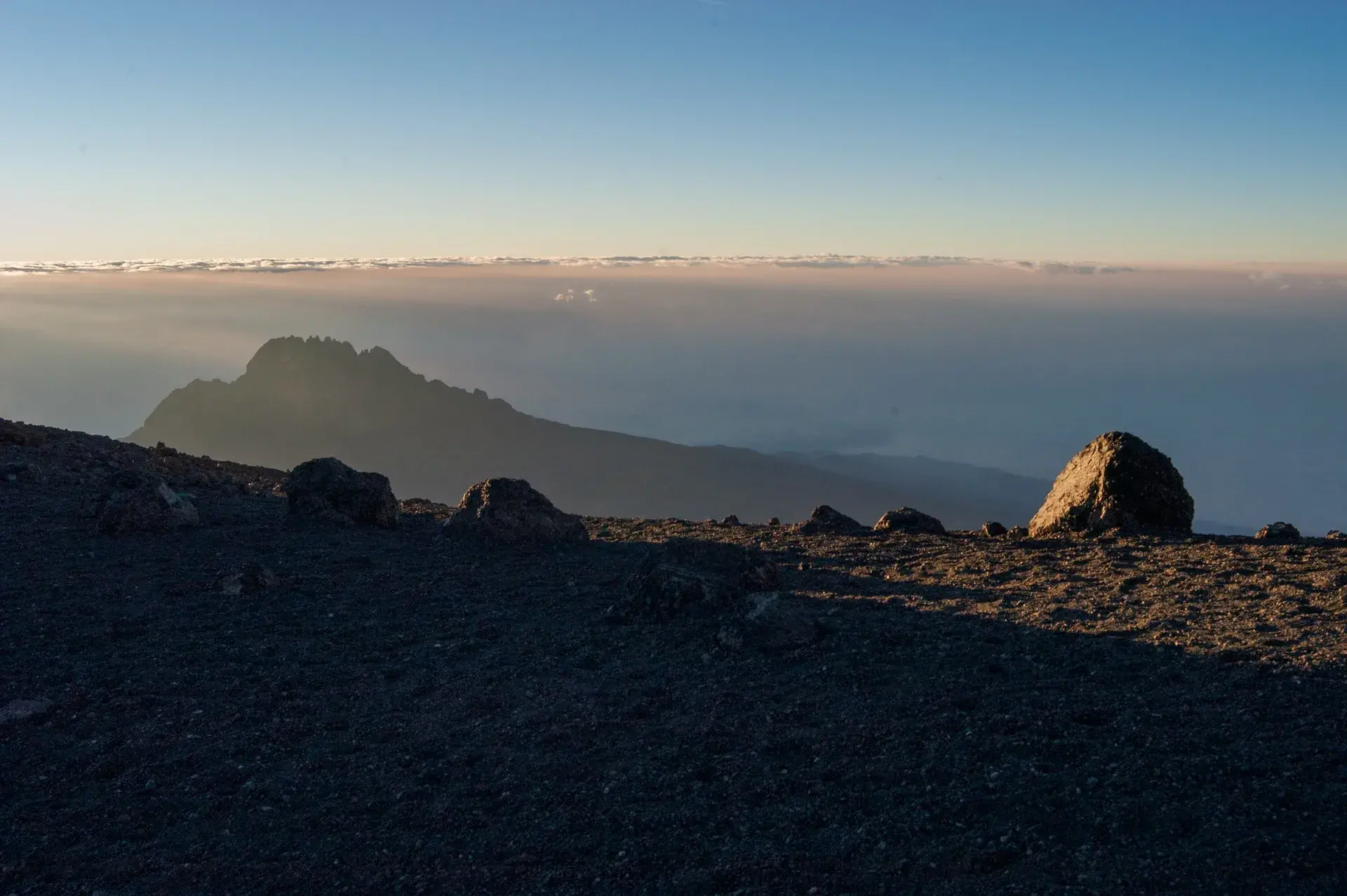
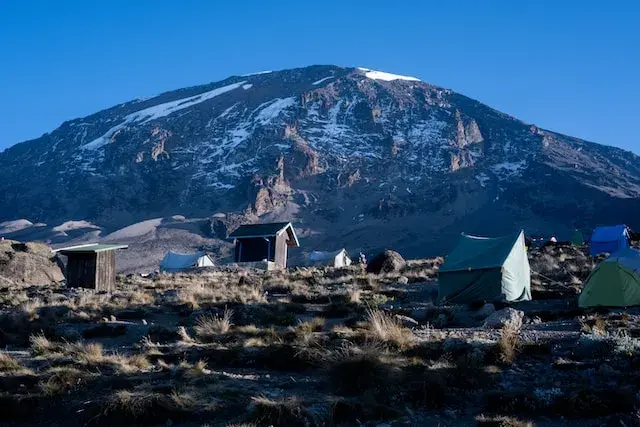
The Northern Circuit Route is Kilimanjaro's longest, most remote, and most rewarding path to the summit — and the one with the highest overall success rate of any route on the mountain. Beginning at Londorossi Gate (2,100 m) on the western flank, it makes a sweeping 360° traverse of the entire mountain, crossing terrain that no other route touches: the wild, seldom-visited northern slopes above the Shira Plateau, the deserted moorland of the Third Cave area, and the dramatic eastern ridge above Mawenzi before swinging south to the summit approach.
Unlike any other Kilimanjaro route, the Northern Circuit spends several days circling the mountain at between 3,800 m and 4,600 m before the summit push — a built-in acclimatization profile so gradual and thorough that it approaches what mountaineers call a "siege-style" ascent of a peak that more routes treat as a trek. The route joins the standard Barafu summit approach on Day 7 but arrives there better rested and far better acclimatized than any group coming from Machame or Lemosho.
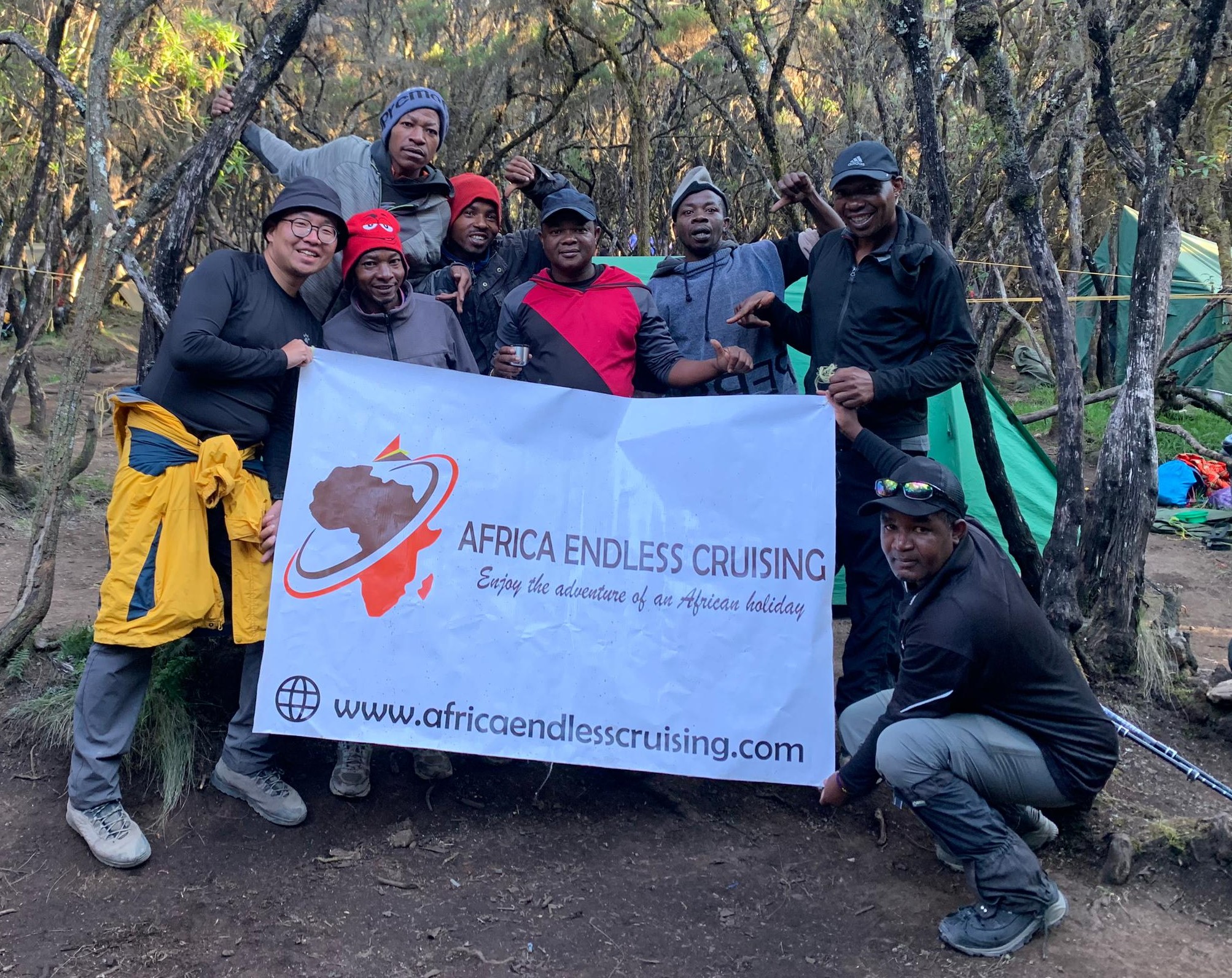
This 8-day itinerary is the route's standard schedule, and it includes everything your Africa Endless Cruising team — KINAPA-certified lead guide, assistant guides, mountain cook, and a full registered porter crew under our Fair Porter Policy — handles gate to gate. Tented camps at every stop, a private dining tent, daily health checks with a pulse oximeter, and nutritionally designed altitude meals are all included.
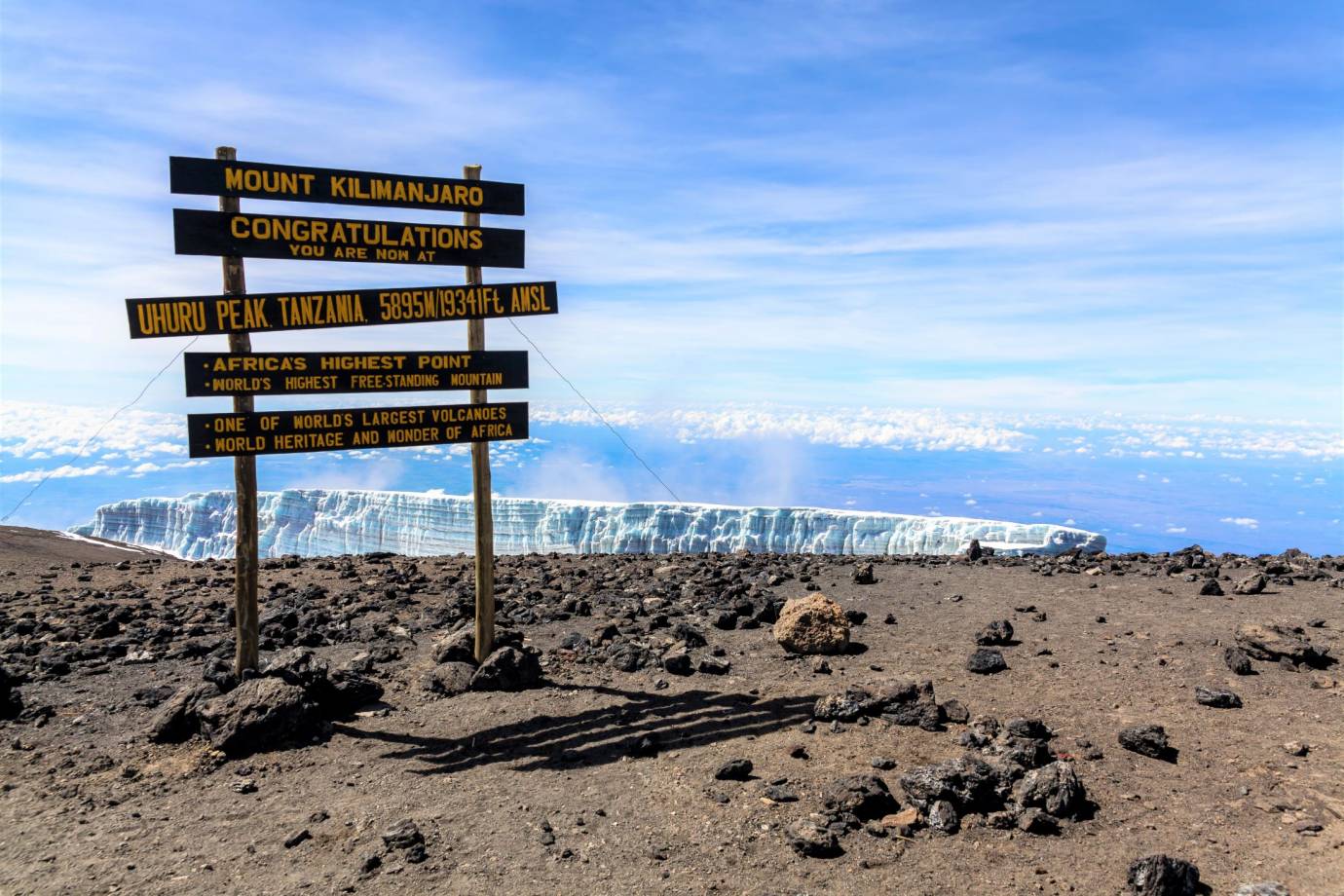
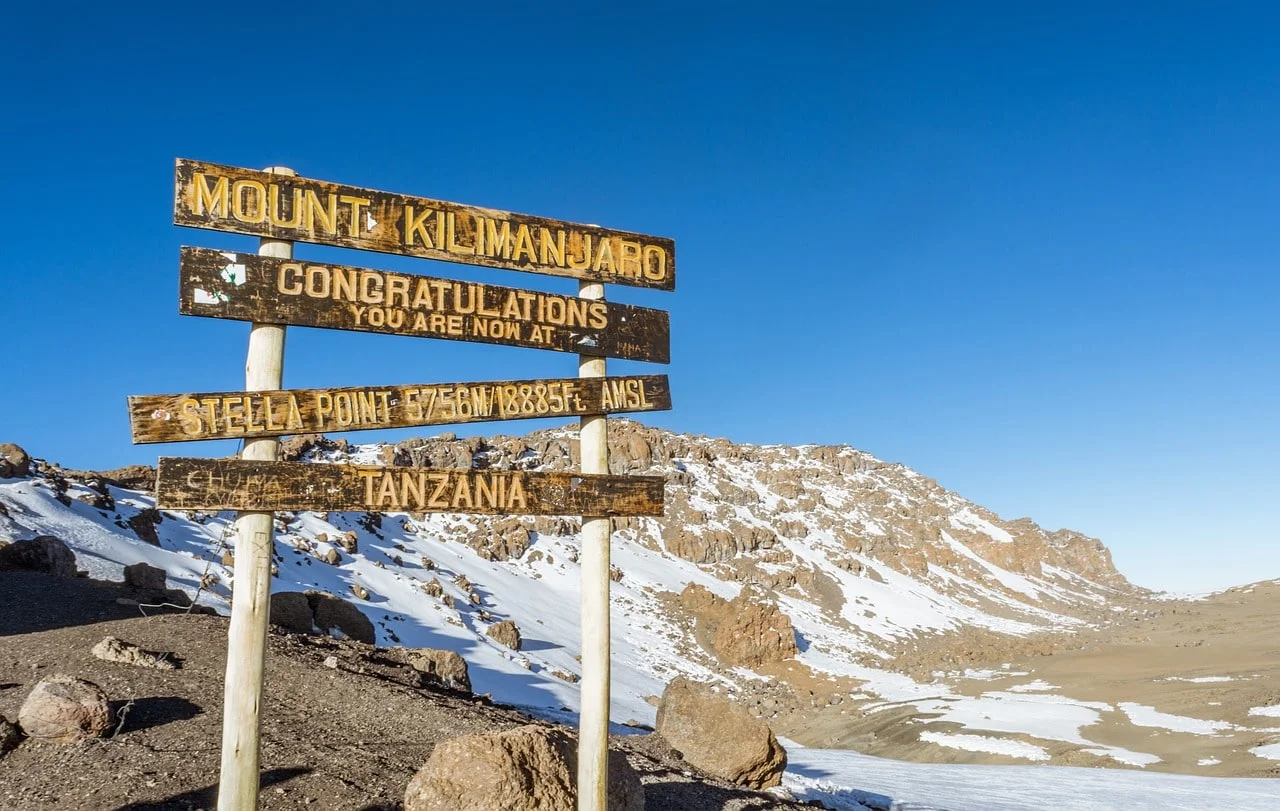
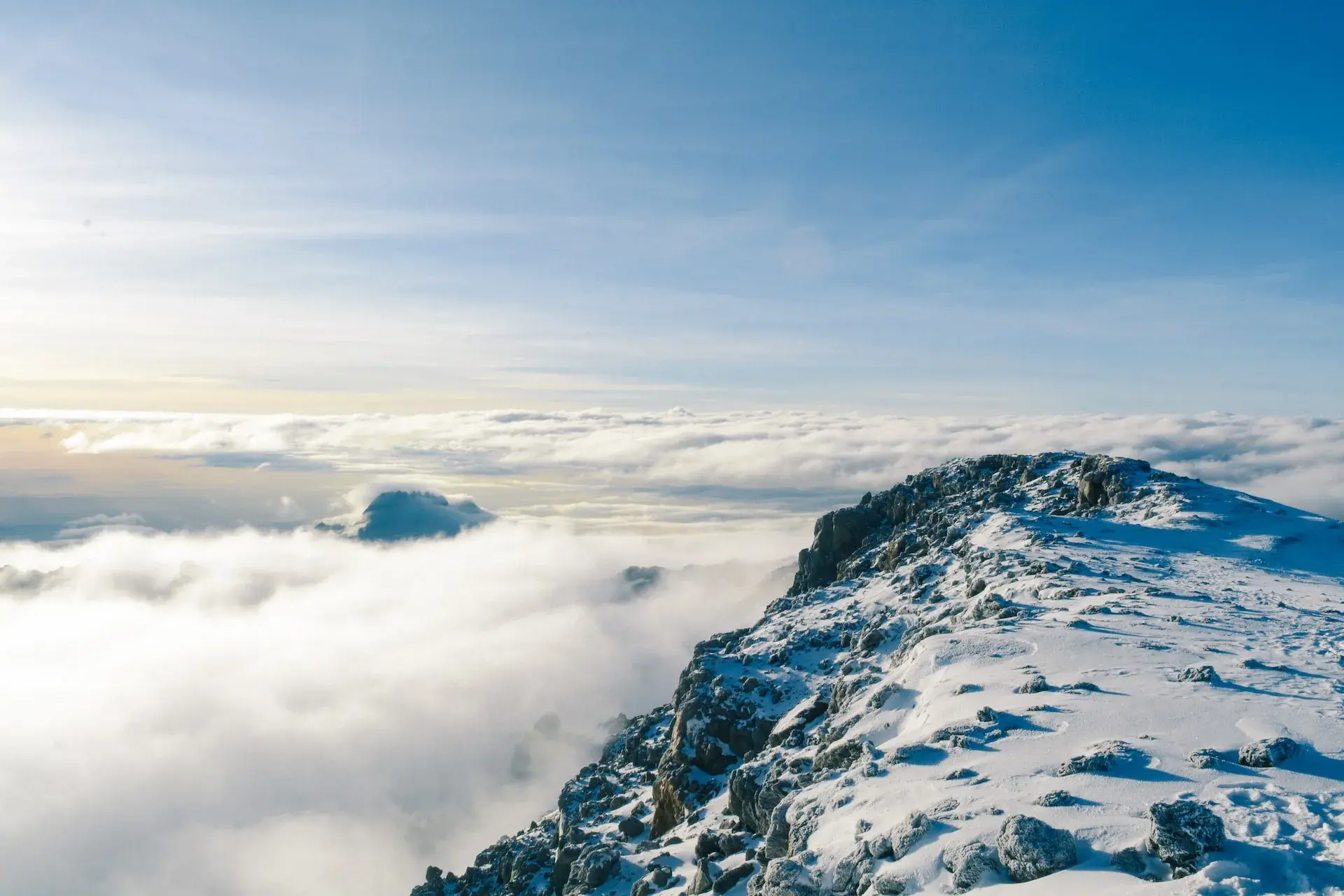
At 5,895 metres, Uhuru Peak on the rim of Kibo Crater is the highest point on the African continent and one of the Seven Summits. Arriving via Stella Point along the crater rim as the sun rises over the Mawenzi side of the mountain — glaciers catching the first gold light, a cloud sea stretching to every horizon — is an experience climbers describe for the rest of their lives.
The Northern Circuit is the only Kilimanjaro route that circumnavigates the entire mountain before the summit push. Days spent on the remote northern and eastern slopes reveal a completely different face of Kilimanjaro — one most climbers never see — with unobstructed views across the Kenyan plains, Amboseli, and the Mawenzi peak's jagged towers rising to the east. The traverse is the route's defining experience.
The Northern Circuit's long, gradual altitude profile — spending multiple nights between 3,800 m and 4,600 m before the summit push — produces the highest success rate of any Kilimanjaro route, typically above 90%. The body has more time at each altitude band to produce the red blood cells that make breathing at 5,895 m possible. Summit night from Barafu, on this route, is approached by far better-adapted climbers than any shorter route allows.
The northern slopes of Kilimanjaro above the Shira Plateau are among the least-trafficked high-altitude terrain in Africa. On most days between Third Cave and Mawenzi Tarn you will see no other climbing groups at all. The Northern Circuit is Kilimanjaro without the crowds — a genuine wilderness experience on Africa's highest peak, within a KINAPA national park that controls access tightly.
Every Africa Endless Cruising Kilimanjaro climb is fully private — your group, your guide, your schedule. Your lead KINAPA-certified guide conducts daily health checks at every camp using a pulse oximeter and makes professional acclimatization decisions. A mountain cook prepares nutritionally designed altitude meals, and a full camping crew pitches and strikes your private camp at every site under our Fair Porter Policy.
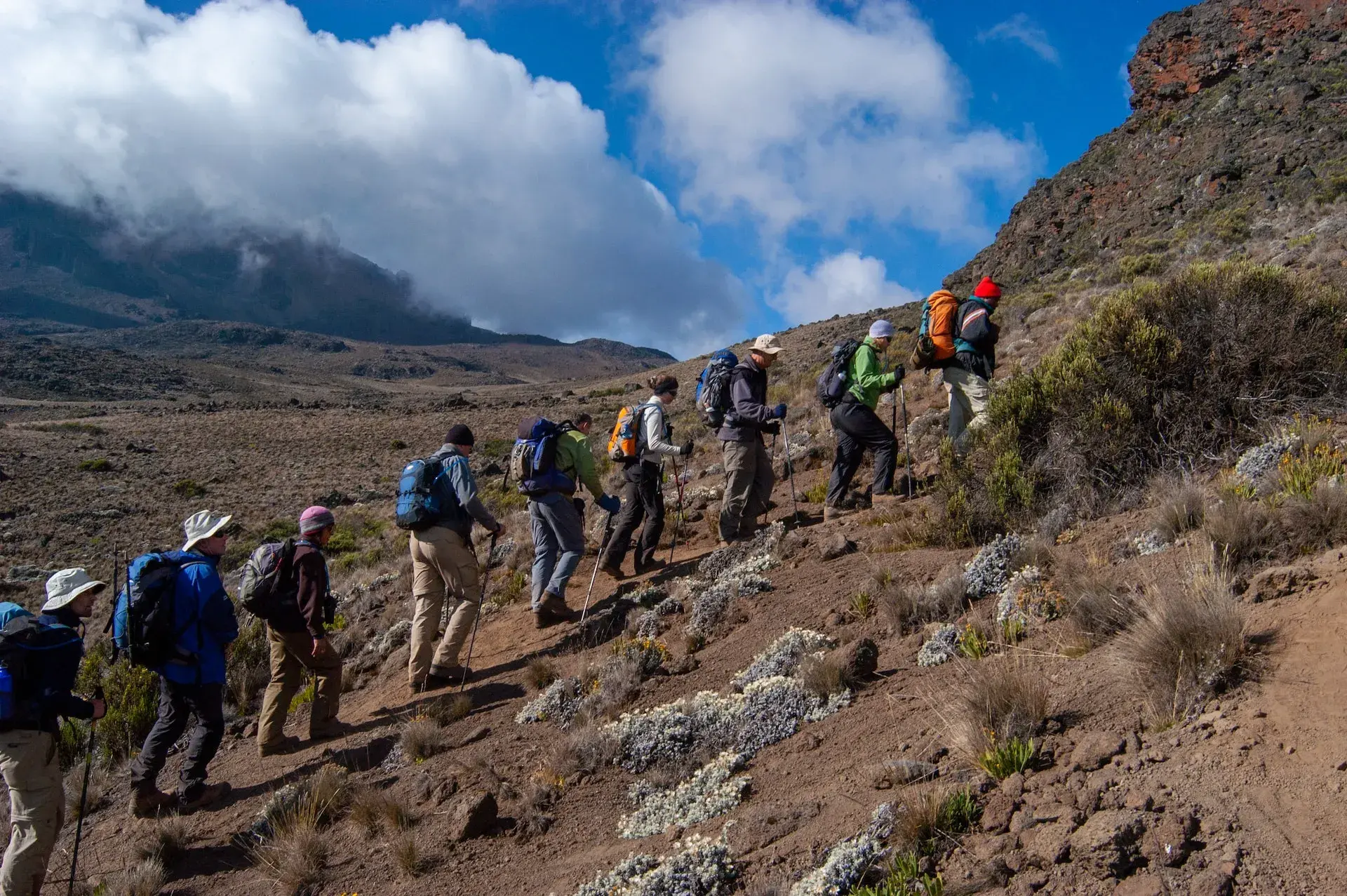
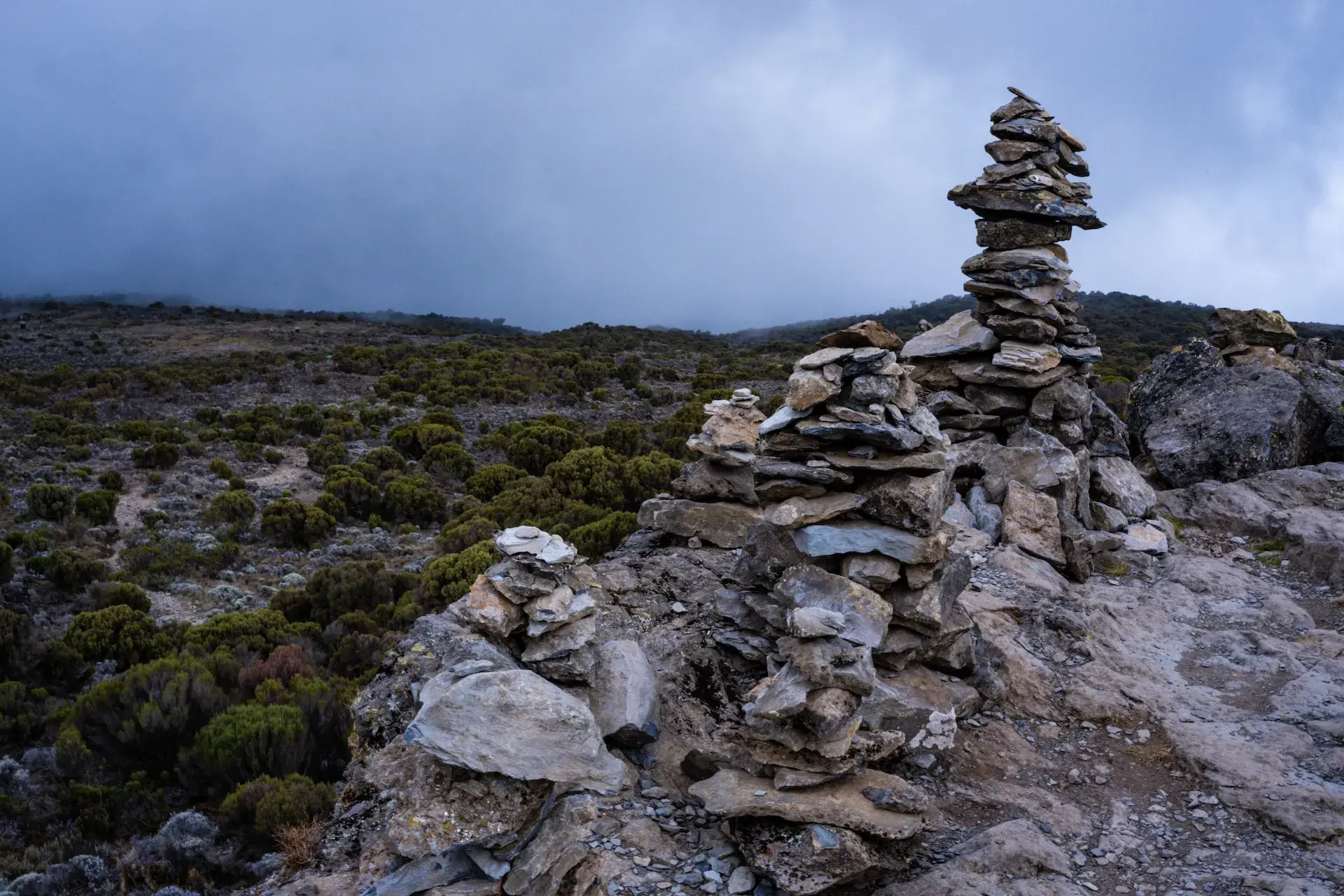
The Northern Circuit passes through every climate zone Kilimanjaro offers — montane rainforest, heath and moorland, alpine desert, the high-altitude lunar landscape of the summit zone — but spends longer in each than any other route. The northern slope moorland, in particular, harbours dense stands of giant groundsel and lobelia that few climbers ever encounter, and the eastern ridge above Mawenzi is unlike any other terrain on the mountain.
Is this climb right for me?
Tour Seasons & Pricing
| Season | 1 Person | 2 Persons | 3 Persons | 4 Persons | 5 Persons | 6+ |
|---|---|---|---|---|---|---|
| Low Season Jan-Mar / Nov-Dec | $2,300 | $2,200 | $2,200 | $2,200 | $2,200 | On Request |
| Shoulder Season Apr-May / Oct | $2,300 | $2,200 | $2,200 | $2,200 | $2,200 | On Request |
| Peak Season Jun-Sep / 20 Dec-10 Jan | $2,400 | $2,200 | $2,200 | $2,200 | $2,200 | On Request |
Prices are per person in USD and may vary by season, group size, availability, and route arrangements.
Day-by-Day Itinerary
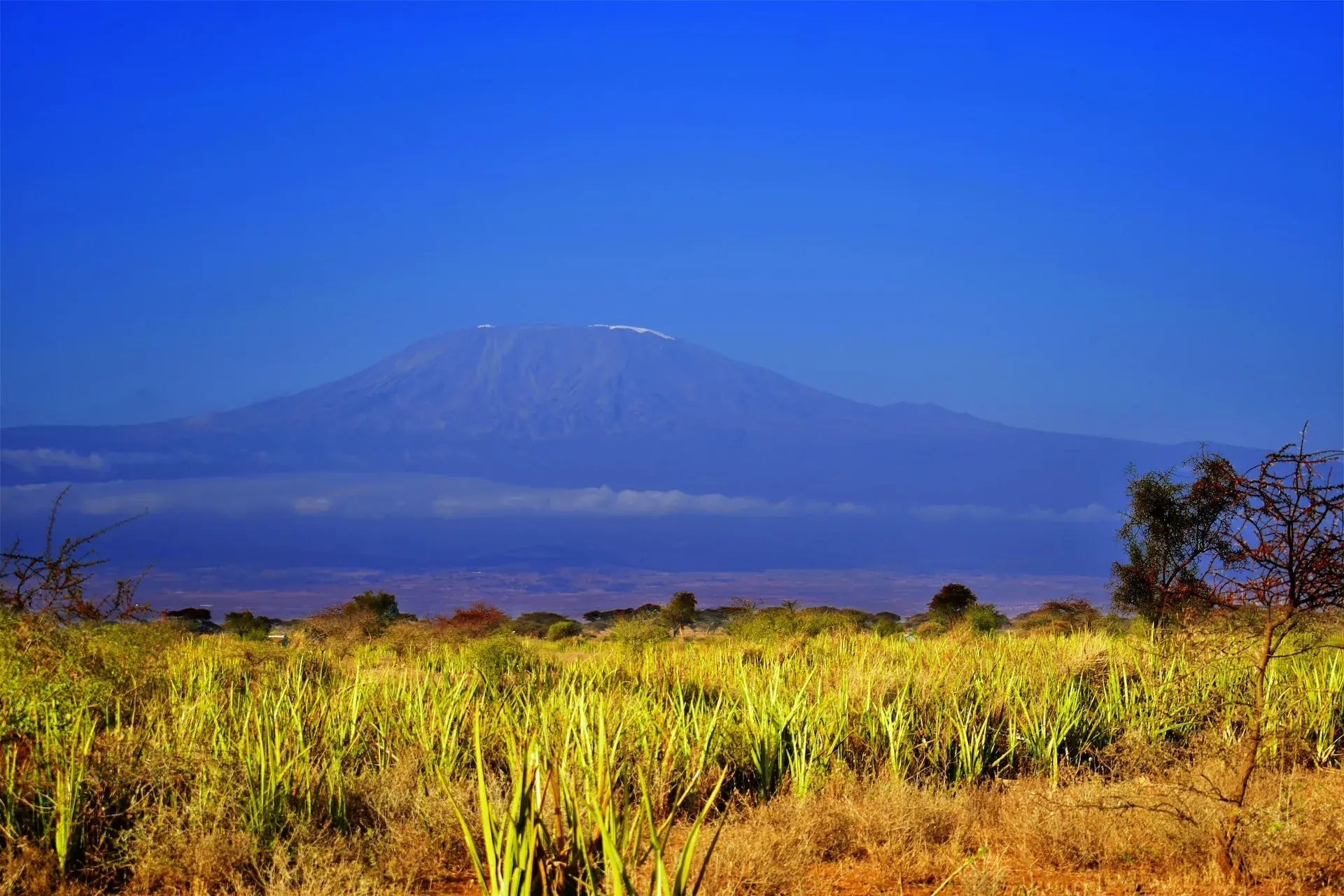
Your Kilimanjaro journey begins when you land at Kilimanjaro International Airport (JRO). A Africa Endless Cruising driver will be waiting at arrivals, and the transfer to Moshi takes about 45 minutes through coffee and banana plantations at the mountain's foot. On a clear day, the white-capped dome of Kibo rising above the town gives the first real sense of scale for what lies ahead.
After settling into your hotel, your lead guide joins you for the pre-climb briefing — covering the Northern Circuit route day by day, the 360° traverse concept and what it means for your schedule, the acclimatization strategy built into the itinerary, mandatory gear review, and the daily health-check protocol. The Northern Circuit is the longest route on the mountain, and your guide will explain exactly how the traverse of the northern slopes sets you up for a higher summit success rate than any other approach.
The evening is yours. Moshi has excellent restaurants within easy reach of the main hotels. An early night is strongly encouraged — Day 1 begins with a longer drive to Londorossi Gate on the mountain's western side.
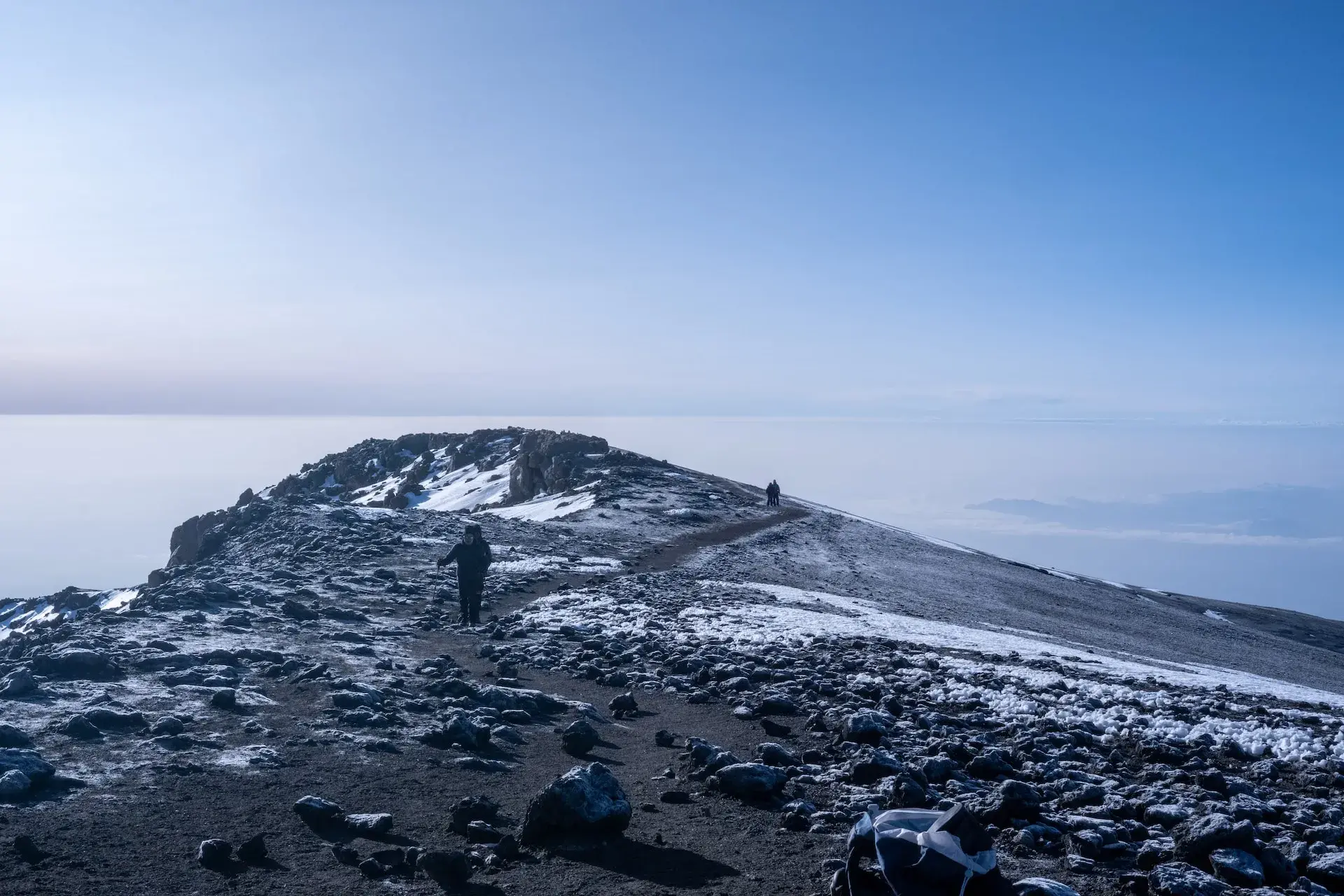
The drive from Moshi to Londorossi Gate (2,100 m) on the mountain's western flank takes approximately two hours through small farming communities and montane forest fringe. At the gate, KINAPA rangers register permits and weigh porter loads while your crew organises the day's lunch boxes — the Northern Circuit's longer approach drive means a later gate arrival than on routes like Machame, so Day 1 is deliberately kept short.
The trail enters dense montane rainforest almost immediately and climbs at a gentle, steady gradient through a canopy of Hagenia and Podocarpus, draped in old-man's-beard lichen and alive with the calls of Hartlaub's turacos and Guereza colobus monkeys. The western forest has a lusher, wilder character than the more-visited southern approaches — you will likely share the trail only with your own crew. Your guide sets the pace from the first step: pole pole, slowly slowly.
Big Tree Camp (2,780 m) sits in a forest clearing named for the enormous Podocarpus and Hagenia specimens that frame the site. By arrival, your crew will have the sleeping tents pitched, the dining tent set up, and a hot drink waiting. Your guide conducts the first evening health check — pulse rate and oxygen saturation with a pulse oximeter. Sleep at 2,780 m is typically easy; the altitude is well within most climbers' comfort zone.
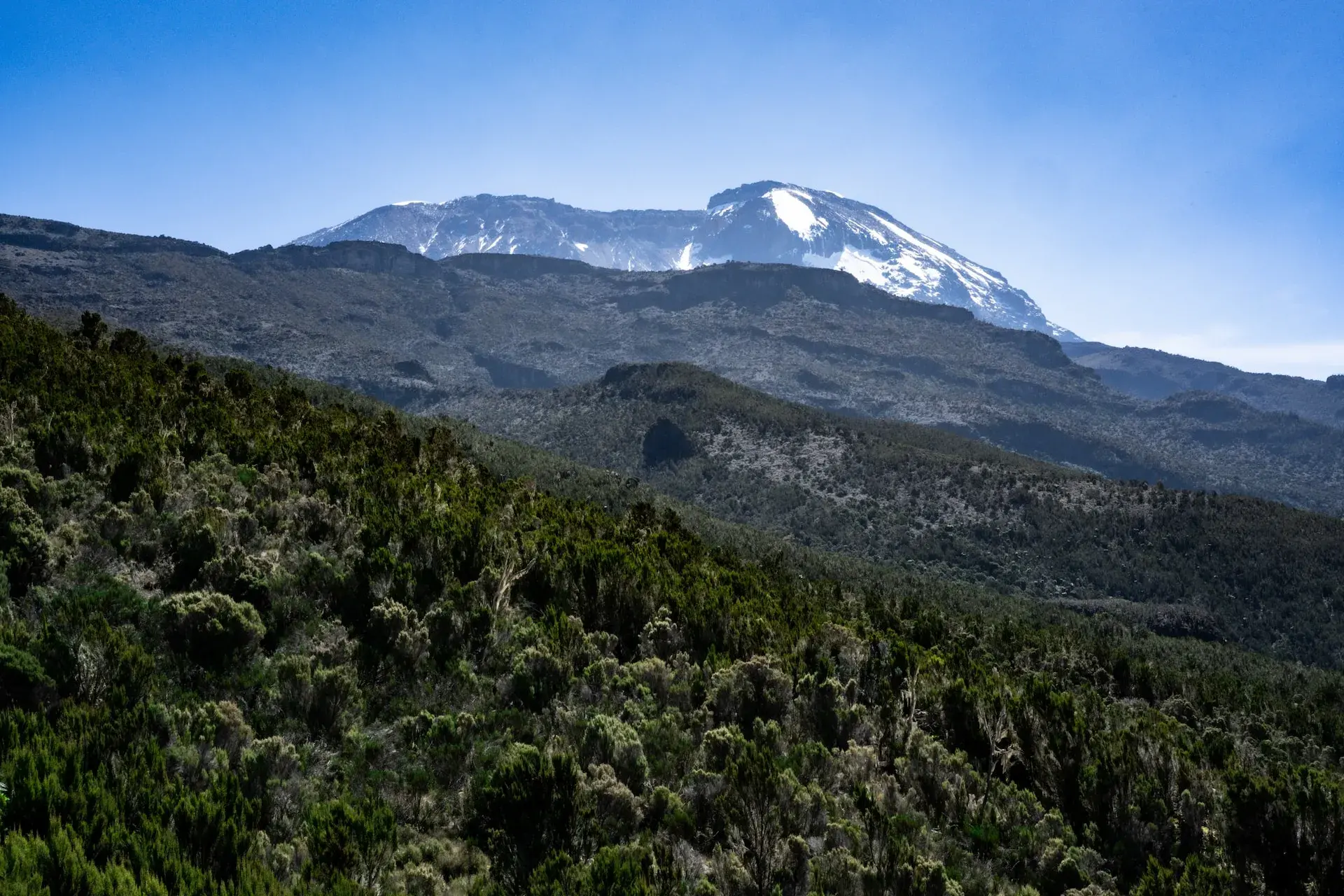
Day 2 climbs steadily out of the rainforest and into the heath and moorland zone within the first hour or two. Giant heather gives way to open hillsides of everlasting flowers, and for the first time wide views open back down over the forest canopy toward the plains and the distant Kenyan border.
By late morning the trail crests the Shira Ridge and descends slightly onto the Shira Plateau — the remnant caldera floor of one of Kilimanjaro's three original volcanic cones, and one of the largest calderas on Earth. The landscape opens dramatically: rolling moorland, vast fields of everlasting flowers, and Kibo's glaciated summit dome filling the view to the east. The western approach to the Shira Plateau, via the Shira Ridge, is more gradual and scenic than the eastern approach used by the Machame Route — the result is a gentler introduction to plateau altitude.
Shira 1 Camp (3,610 m) sits in the western part of the plateau with good Kibo views and a reliable water source nearby. Your guide conducts the evening health check and outlines tomorrow's plan: a cross-plateau walk to Shira 2, positioning the group for the start of the northern traverse.
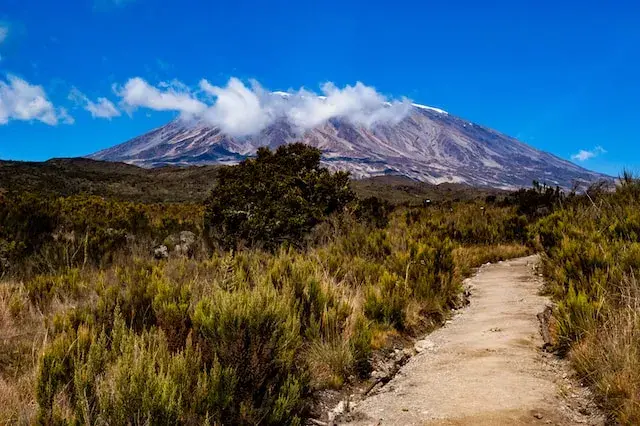
Day 3 is a relatively gentle walk across the open Shira Plateau from west to east — a moderate stage designed to let your body consolidate the altitude gain from Day 2 before the route swings onto the remote northern slopes. The Shira Plateau, at its widest here, offers truly panoramic walking: moorland in every direction, the Shira Cathedral volcanic rocks to the south, and the ever-growing mass of Kibo ahead.
The trail crosses the plateau on a broad, well-marked path, passing the junction where the Machame and Lemosho routes converge. The Northern Circuit diverges here — rather than heading south toward Lava Tower and Barranco as those routes do, the path bends north and begins the traverse that defines this route.
Shira 2 Camp (3,840 m) sits at the eastern edge of the plateau with outstanding 360° views. From here you can see not only Kibo's summit glaciers but also the start of the northern moorland where tomorrow's trail disappears around the mountain's shoulder. Your guide conducts the evening health check and explains the significance of what happens next — the start of the northern traverse that no other route takes.
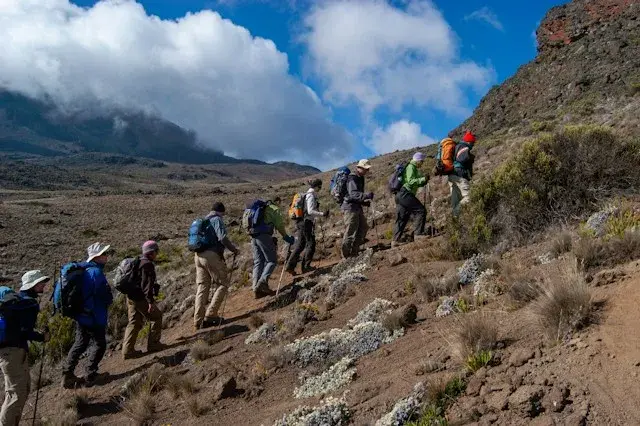
This is the day the Northern Circuit fully earns its name. Leaving Shira 2, the trail bends north and east around Kibo's broad northern shoulder, entering terrain that virtually no other Kilimanjaro route touches. Within an hour, all other climbing groups have disappeared. The northern slopes are a vast, open moorland of giant groundsel and lobelia, cut through by seasonal stream gullies and dominated by the enormous bulk of Kibo's northern face above.
The trail is longer in distance than previous days but remains relatively flat in net elevation gain — the route undulates across ridges and valleys rather than climbing steeply, keeping your body at a consistent altitude band for maximum acclimatization benefit. The scenery is utterly unlike anything on the mountain's southern side: the Kenyan plains are visible far below to the north, and on a clear day the distant glint of Amboseli's lakes can be made out.
Third Cave Camp (3,870 m), named for a series of small lava caves used historically as overnight shelters, sits in a sheltered bowl on the northern slope with views that feel entirely separate from anything on the mountain's popular southern side. This is wilderness camping at its most genuine — you will likely have the entire camp to yourselves. Your guide conducts a detailed evening health check as altitude begins to register more noticeably.
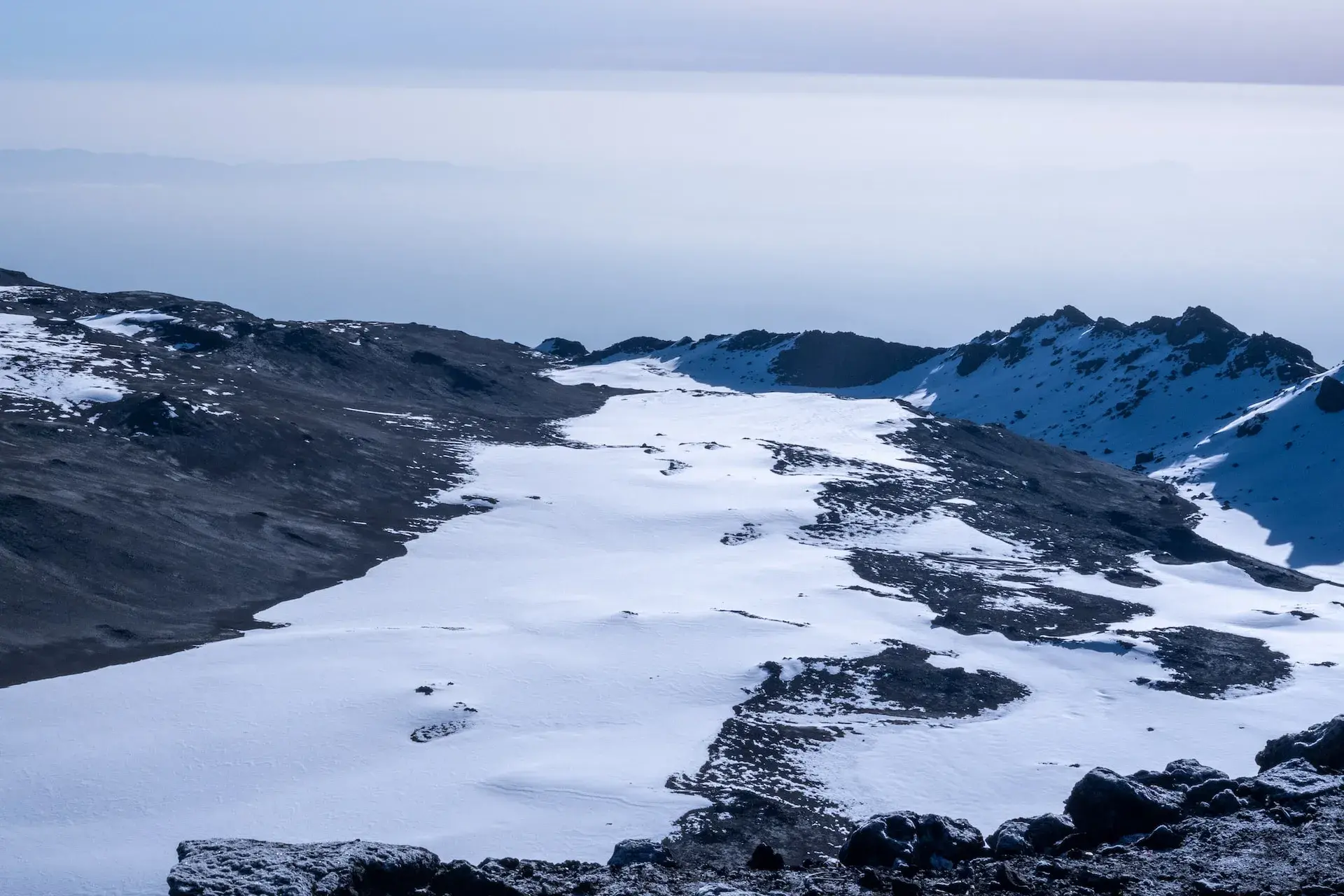
Day 5 continues the traverse around the mountain's northern and eastern flanks, climbing steadily into alpine desert as vegetation thins to bare volcanic rock and dust. The trail gains altitude more deliberately today, pushing into the 4,000–4,600 m band where the effects of altitude become noticeable to almost everyone: slower breathing, a heavier pace, the need for more deliberate hydration. This is exactly the acclimatization stimulus the route is designed around — sustained time at altitude without overexerting.
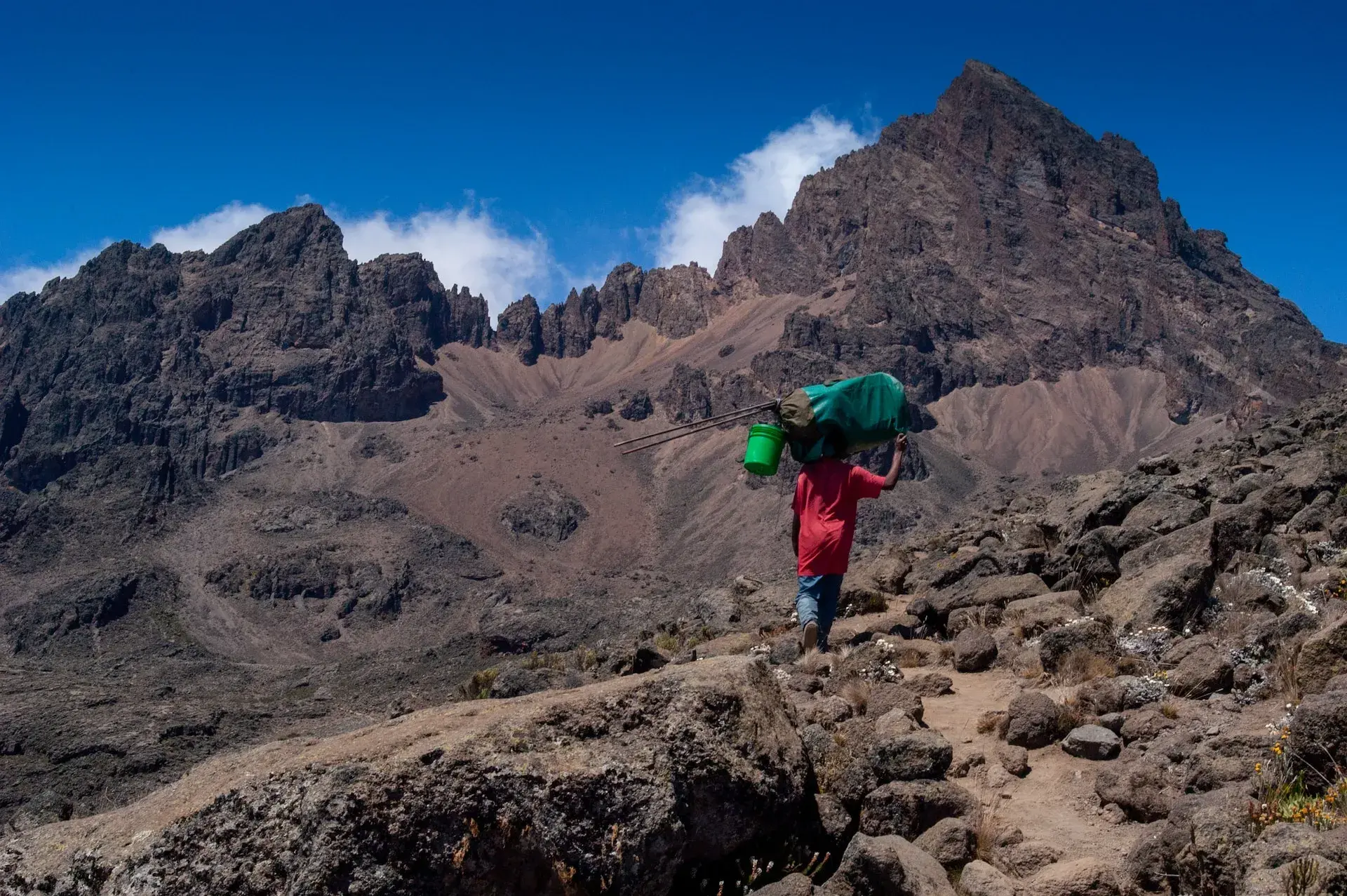
As the trail rounds the mountain's eastern shoulder, the jagged towers of Mawenzi (5,149 m) — Kilimanjaro's second volcanic cone and a genuinely technical mountaineering objective — dominate the view to the south. The scale of Mawenzi from this angle, seen from beside and above, is startling. Below the peak, the distinctive blue-green disc of Mawenzi Tarn reflects the sky at 4,330 m.
School Hut (4,750 m) or Mawenzi Tarn Camp (4,330 m) serves as the night's stop depending on conditions and group acclimatization. At this altitude the body is working hard; a warm, high-calorie dinner and early sleep are non-negotiable. Your guide's evening health check here is among the most important of the climb — the reading tonight directly informs how the group approaches summit night.
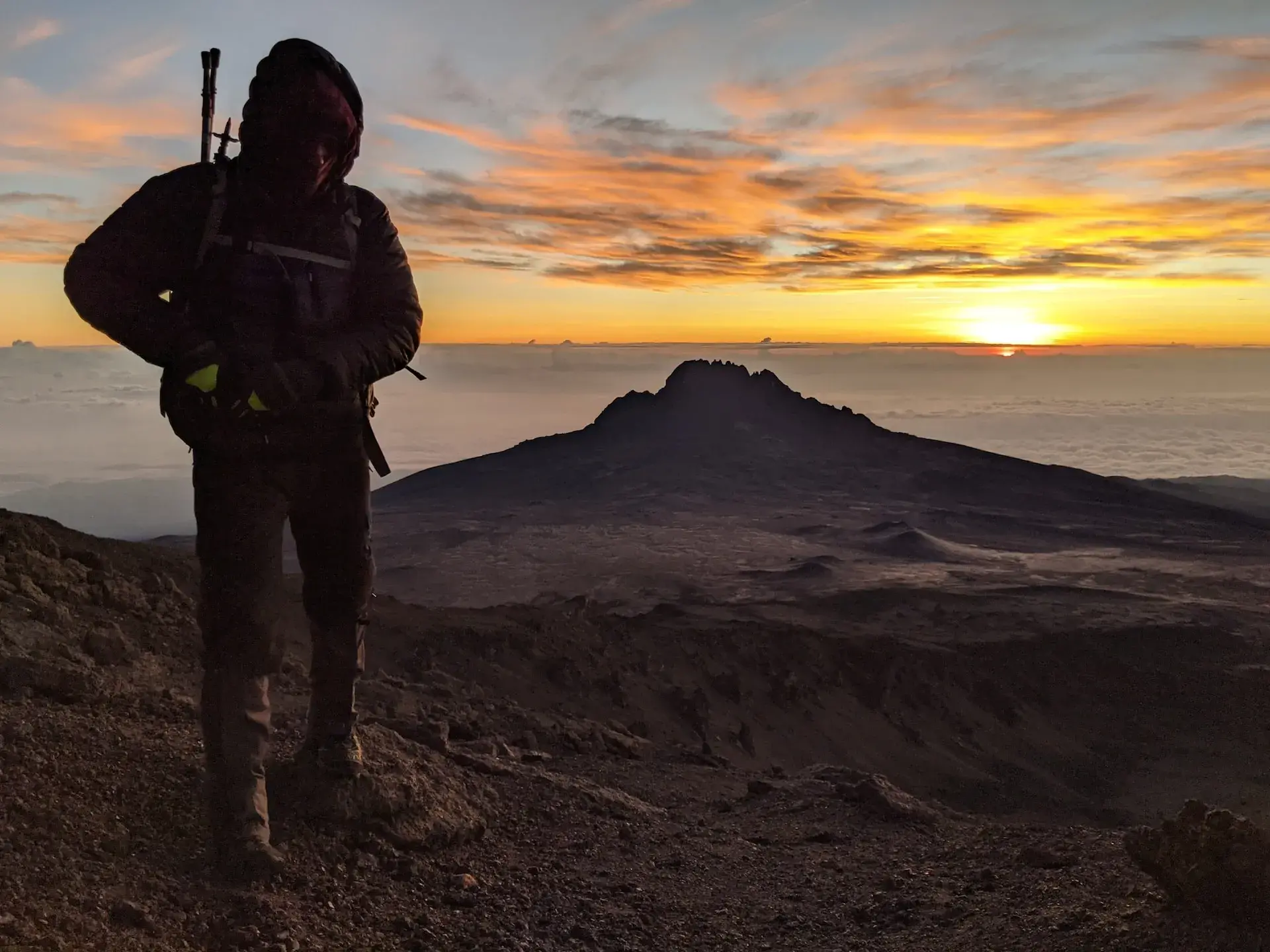
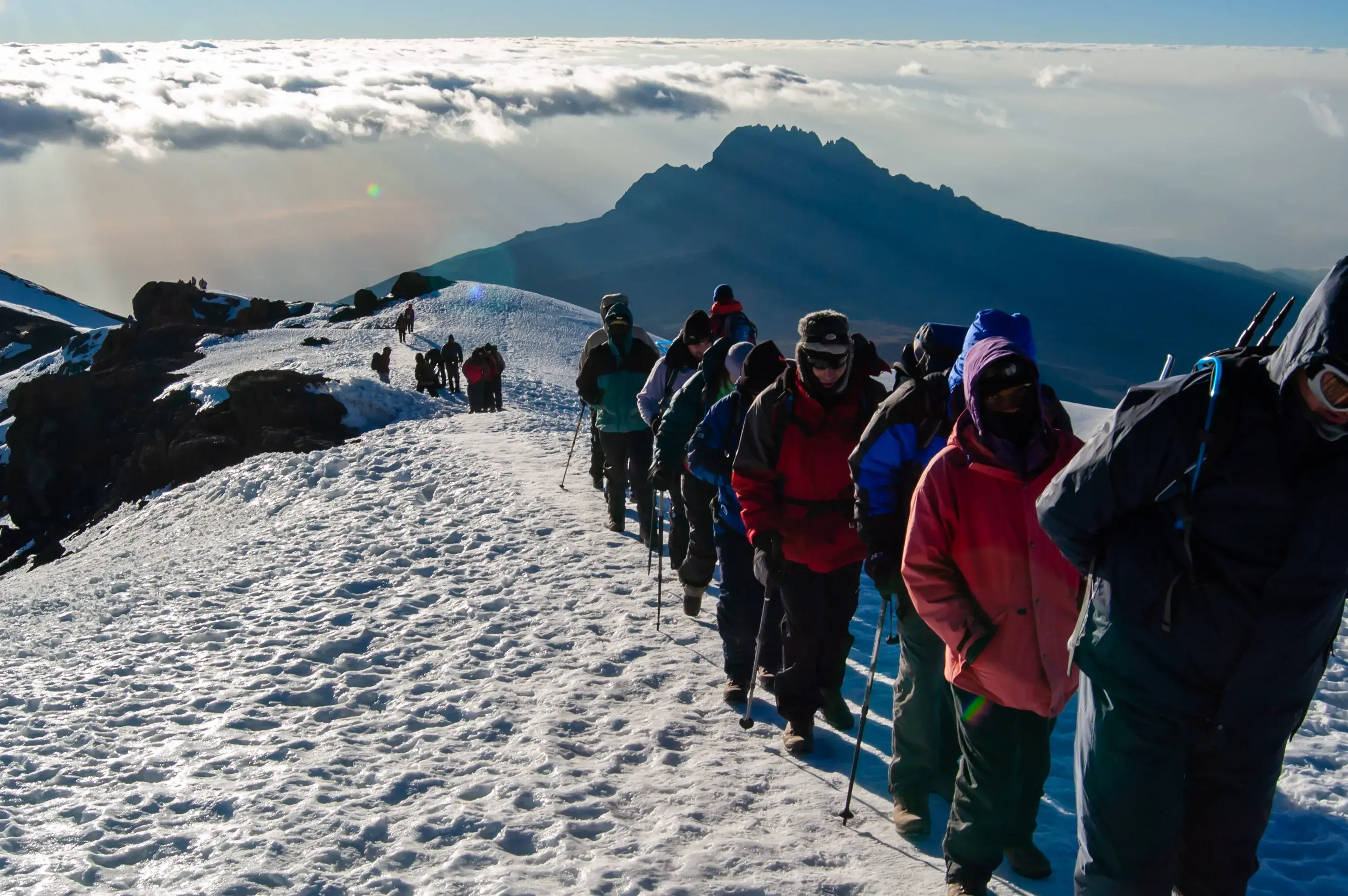
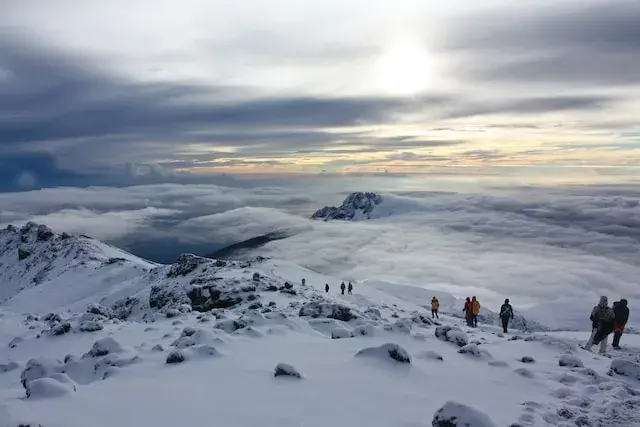
Day 6 is short and deliberate — a slow, final walk across the Saddle (the broad alpine plateau between Mawenzi and Kibo) to Barafu Camp ("ice" in Swahili), the summit launch point perched on a narrow ridge at 4,673 m. The trail crosses bare volcanic scree and rock, with Kibo's south face rising steeply ahead and Mawenzi receding behind. By now the Northern Circuit has circled almost the entire mountain.
Barafu is summit base camp, and the mood shifts noticeably here. The afternoon is dedicated entirely to preparation: an early, high-carbohydrate dinner, laying out summit clothing in the correct order, packing head torches and water within easy reach, and being horizontal well before dark. Your guide delivers the final, detailed summit briefing — exact timings, the route via Stella Point, and the full descent plan back to Mweka Camp.
The instruction is simple and non-negotiable: eat everything in front of you, drink two litres of water before attempting sleep, and rest — even if real sleep doesn't come, which is normal at this altitude. By this point on the Northern Circuit, your body has had far more time to acclimatize than on any other Kilimanjaro route. Your guide wakes the group at 23:00.
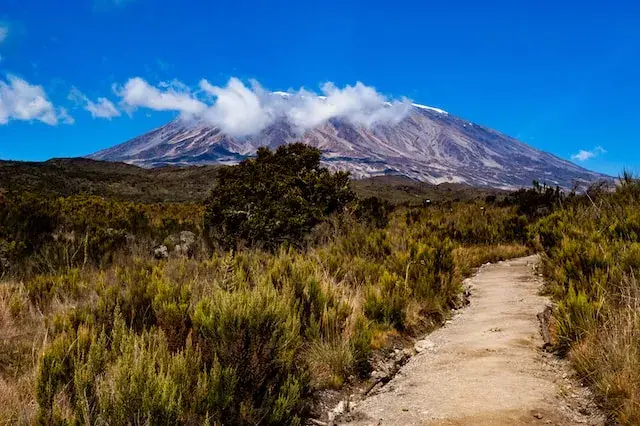
Around midnight, dressed in full summit layers — base layer, mid layer, down jacket, windproof shell, insulated trousers, balaclava, two pairs of gloves, gaiters — you step out into temperatures of −10°C to −20°C and a sky thick with stars. The ascent from Barafu follows long switchbacks up loose scree toward Stella Point (5,756 m) on the crater rim, the hardest single section of the climb. Your guide keeps the pace to a controlled shuffle, with deliberate pauses to breathe every few steps; oxygen saturation at this altitude runs at roughly half of sea-level pressure.
Regular stops allow your guide to check for the warning signs of HACE and HAPE — confusion, loss of coordination, severe vomiting — and anyone showing them is descended immediately by an assistant guide while the rest of the group continues. Stella Point itself arrives as a quiet, almost anticlimactic moment after hours of effort: a wooden sign on the crater rim, with the vast Kibo crater and the Furtwängler Glacier opening up ahead in the pre-dawn dark.
From Stella Point, the trail follows the crater rim for roughly 45 minutes to Uhuru Peak (5,895 m), timed so that the sky lightens over Kenya as you walk. The glaciers catch the first gold light, and then the summit sign appears — the green and yellow marker at the highest point in Africa, with a cloud sea stretching to every horizon below. Most groups spend 15–30 minutes at the top before the cold makes a longer stay impractical.
The descent is long but exhilarating — loose scree allows a fast, skidding pace back to Barafu (2–3 hours) for a hot breakfast and a short rest, before continuing down through alpine desert and moorland all the way to Mweka Camp (3,100 m) in the upper rainforest. Most groups arrive at Mweka in the late afternoon, exhausted but elated, for an early, well-earned dinner and sleep.
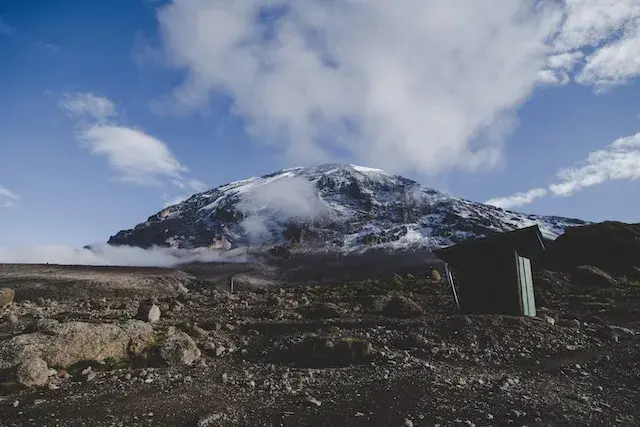
The final morning on the mountain is a gentle, sociable descent through thick rainforest back to civilisation. The trail is steady underfoot, the air warms with every metre lost, and the relief of summit night fully settles in as the forest closes back overhead — a different forest from the one you entered eight days ago, but the same canopy sounds: turacos calling, colobus crashing through branches overhead.
At Mweka Gate (1,640 m), KINAPA rangers record your descent and process summit certificates. The porters line up for the traditional farewell circle, where your guide introduces each crew member by name — the moment to thank and tip them individually for carrying everything that made the climb possible. From there it's a short drive back to your Moshi hotel for a long-awaited hot shower, followed by a celebration dinner where your guide presents your official summit certificates.
The final morning in Moshi is yours to enjoy at a pace that feels luxurious after eight days on the mountain. Sleep in, take a slow breakfast on the hotel terrace, and — on a clear morning — look up at Kibo's summit knowing exactly what it took to stand on it, and that you did it via a route most climbers never take.
Your private transfer to Kilimanjaro International Airport (JRO) departs timed precisely to your flight. Our team coordinates luggage collection, hotel checkout, and your onward journey so the logistics stay invisible. If time allows, Moshi's old town market and the Kilimanjaro Coffee Estate tour are both worth a final half-day.
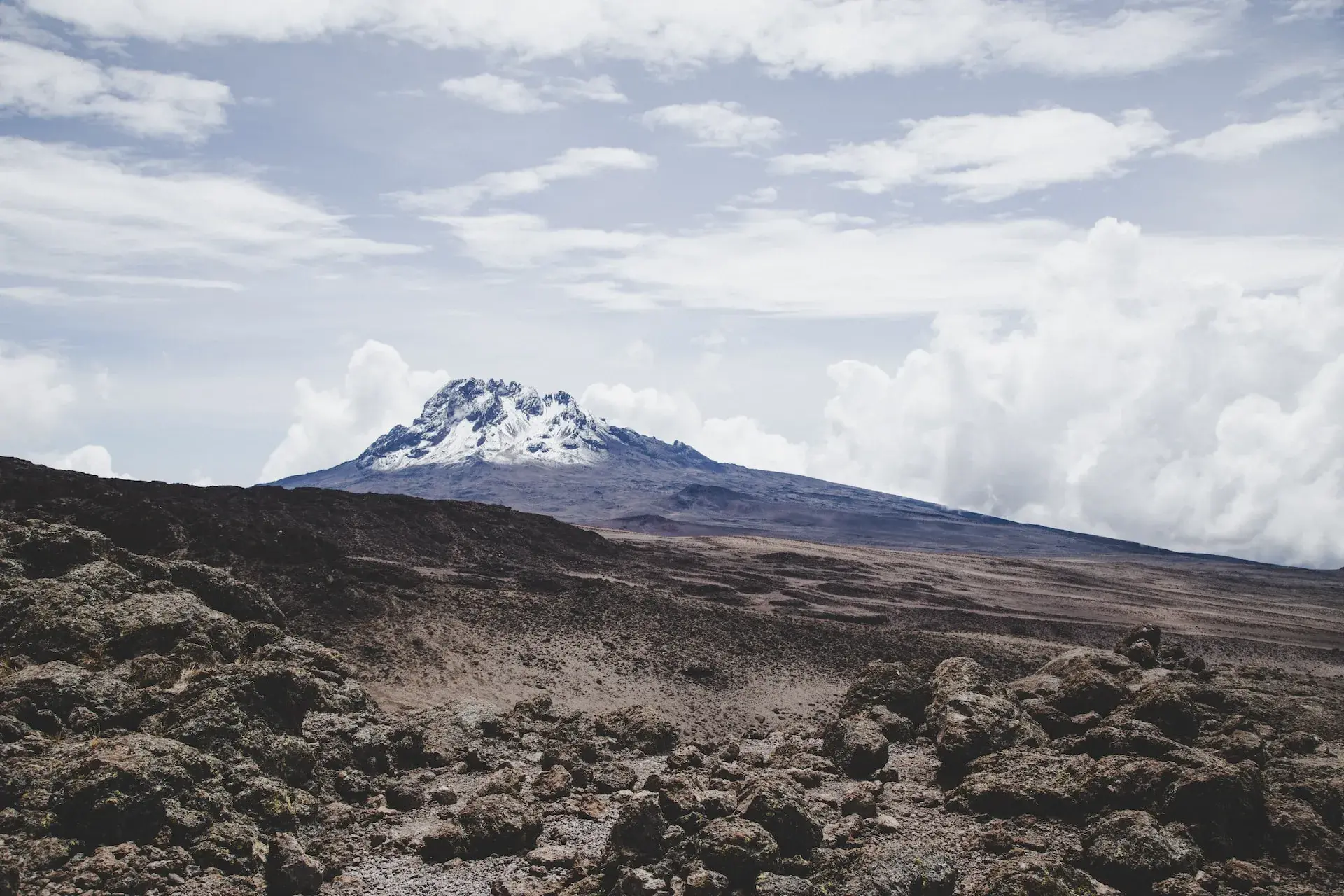
A full 360° traverse — the longest and most rewarding line to the roof of Africa.
What's Included & Excluded
Included in Your Climb
Your lead guide holds a current, active Kilimanjaro National Park Authority (KINAPA) guiding licence and has a minimum of 8 years' experience on the mountain. All Africa Endless Cruising Kilimanjaro guides are Wilderness First Aid certified and carry supplemental oxygen for emergencies.
- Daily pulse-oximeter health checks at every camp (morning and evening)
- Fluent English; Swahili and basic German/French available on request
- Supplemental oxygen cylinder carried on all climbs above Shira 2
- Stretcher and emergency evacuation coordination authority
- One assistant guide per 3 climbers (larger groups receive more)
Each climber is allocated a personal porter for their main duffel bag (max 15 kg). All group equipment — tents, food, cooking gear, emergency supplies — is carried by additional registered porters. A dedicated mountain cook prepares all meals on-mountain. Every porter on a Africa Endless Cruising climb is registered with KINAPA, carries a maximum regulated load, is provided with proper warm equipment for the altitude, and is paid under our Fair Porter Policy — a wage structure above the Kilimanjaro Porters Assistance Project minimum.
All Kilimanjaro National Park entrance fees, campsite fees at every camp on the Northern Circuit, crew camping fees, and the mandatory KINAPA Rescue Fund levy are pre-paid in full and included in your tour price. There are no additional charges at the gate and no surprise fees during the climb.
The Northern Circuit is a fully tented route, so all camping equipment is included: private 4-season mountain tents (2-person tents used for solo occupancy on request), a dedicated dining tent, mess table and chairs, foam sleeping mats, and a private camp toilet tent. You do not need to bring a tent, mat, or toilet tent yourself — just your personal sleeping bag (rental available).
Your mountain cook provides a hot breakfast, packed or hot lunch, and a three-course dinner in your private dining tent at every camp. Meals are high-calorie, high-carbohydrate, and nutritionally designed for altitude performance. Dietary requirements (vegetarian, vegan, gluten-free, halal) are catered for with advance notice. Unlimited hot drinks (tea, coffee, cocoa, ginger water) are available at every camp throughout the day.
One night's hotel accommodation in Moshi before the climb (arrival night) and one night on descent (Day 8 return) are both included in the tour price. The hotel is a comfortable, centrally located property with en-suite rooms, hot water, luggage storage for bags left during the climb, and a terrace with Kilimanjaro views on clear mornings. Dinner is included on the arrival night; breakfast and celebration dinner are included on the descent night.
Return private vehicle transfers between Kilimanjaro International Airport (JRO) and your Moshi hotel, and between Moshi and Londorossi Gate (ascent day) / Mweka Gate (descent day), are included. Vehicle is a clean, air-conditioned 4×4 or minivan depending on group size.
All climbers who reach Stella Point (5,756 m) on the crater rim receive a Stella Point certificate. Those who continue to Uhuru Peak (5,895 m) receive the full Uhuru Peak summit certificate — printed on high-quality paper, signed by KINAPA, and dated with your summit day. These are presented by your guide at Mweka Gate on descent, and are available in framed versions through Africa Endless Cruising on request.