
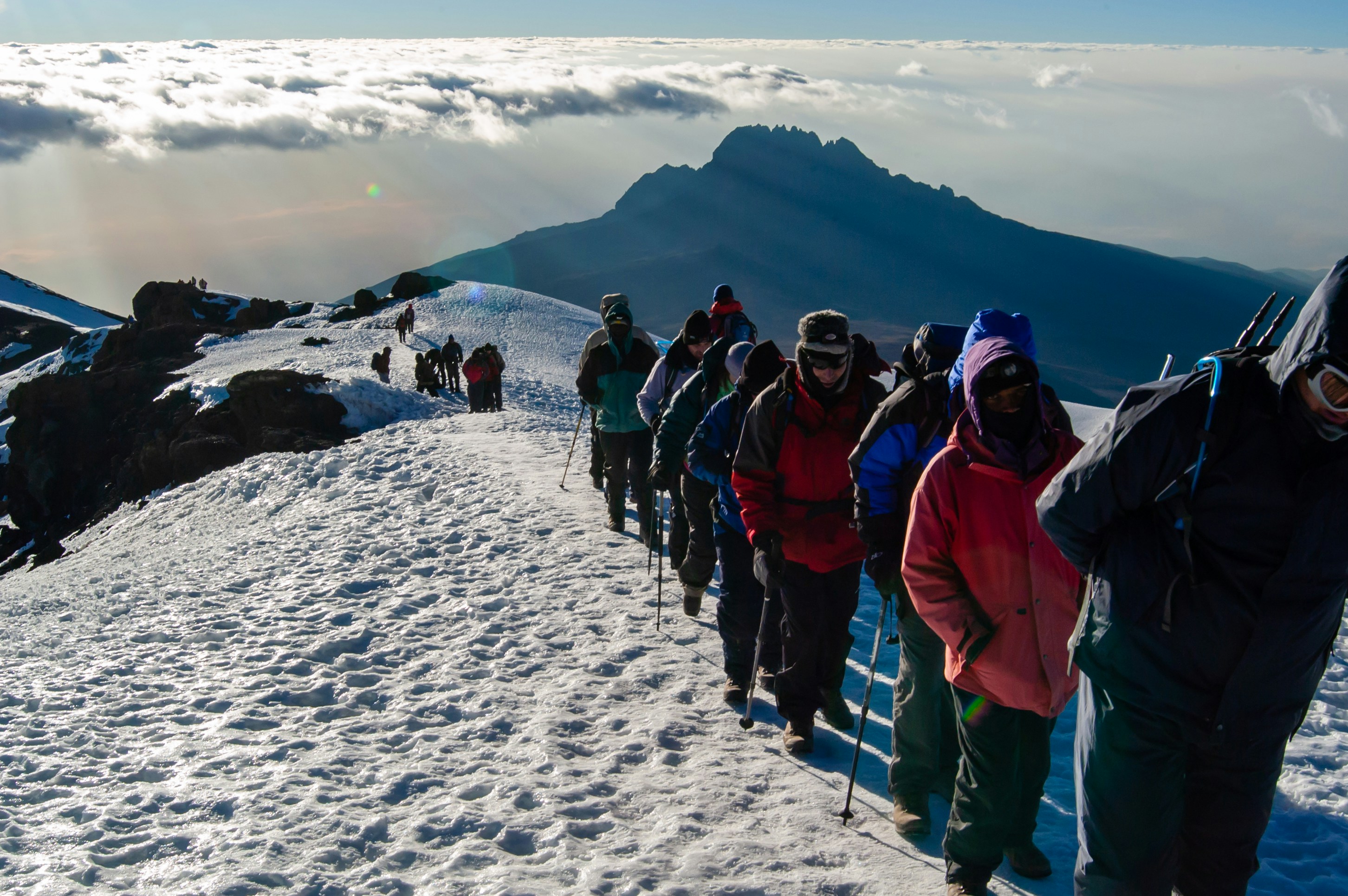
At 5,895 metres above sea level, Mount Kilimanjaro is Africa's highest peak and one of the world's most accessible high-altitude treks. But choosing the right time to climb can make the difference between a comfortable summit bid and a battle against heavy rain and zero visibility. Here is everything you need to know - straight from our guides who live at Kilimanjaro's doorstep in Moshi.
Kilimanjaro's Two Climbing Seasons
Kilimanjaro has two primary dry seasons ideal for climbing, and two wet seasons you'll want to plan around. Unlike many mountains, Kilimanjaro can technically be climbed year-round - but your experience and summit success rate will vary dramatically by month.
The short dry season. Clear skies, excellent visibility, and the southern icefield at its most spectacular. Cooler temperatures keep you comfortable on the upper slopes.
The long dry season and the most popular climbing window. Warm, stable weather with reliable clear summits. Busy on the main routes - book well ahead.
The long rains. Heavy, sustained rainfall across all routes. Muddy trails, low cloud, and poor summit visibility. Lowest success rates of the year.
The short rains arrive. Conditions vary - early November can still be good, but rain becomes more frequent through the month. Fewer crowds and lower prices.
Complete Month-by-Month Breakdown
Here's exactly what to expect in each month of the year on Kilimanjaro:
| Month | Conditions | Crowds | Verdict |
|---|---|---|---|
| January | Dry, clear, cold nights | Moderate | Excellent |
| February | Dry, warmest month, best visibility | Low | Excellent |
| March | Dry, occasional clouds building | Low | Very Good |
| April | Long rains begin, heavy & consistent | Very Low | Avoid |
| May | Heaviest rainfall of the year | Very Low | Avoid |
| June | Rains clear, cool and dry | Moderate | Very Good |
| July | Peak dry season, clear skies | High | Excellent |
| August | Warm, reliable, beautiful vistas | Very High | Excellent |
| September | Stable dry weather continues | High | Excellent |
| October | Dry, fewer crowds than peak months | Moderate | Good |
| November | Short rains begin, variable | Low | Caution |
| December | Rains ease, drier by mid-month | Moderate | Good |
January, February & March - The Hidden Gem Season
Many experienced trekkers consider January through March to be Kilimanjaro's best-kept secret. The long dry season from June to October gets all the attention, but the short dry season at the start of the year offers everything you could want - and far fewer boots on the mountain.
What makes it special
February is widely regarded as the single best month to climb. Temperatures on the lower slopes are at their warmest, cloud cover is minimal, and the summit views - stretching out over the plains of Amboseli and the Kenya highlands - are breathtaking in the crystal-clear air. The glaciers catch the morning light in extraordinary ways.
January is equally excellent. The festive season rush has passed, crowds are thin, and accommodation in Moshi and Arusha is easy to arrange. January nights on the upper mountain can be brutally cold - dropping to -20C near the summit - so good layering is essential.
March remains reliable but you may notice afternoon cloud building over the lower forest zones by the latter half of the month as the long rains approach. Start by mid-March to enjoy the best of this window.
If you're flexible on dates, mid-January to late February is our top pick for experienced climbers. You get the best weather and can often arrange your climb within a week's notice rather than months ahead. Summit mornings in February are unforgettable.
June to October - The Main Season
This is when Kilimanjaro is at its busiest and its best simultaneously. The long dry season delivers the most consistent weather of the year, and the warmer temperatures during the day make acclimatisation somewhat more comfortable than in the colder January window.
July & August - Peak of the Peak
These two months see the highest number of climbers on the mountain. Lemosho, Machame, and Rongai routes are all busy, particularly around the Barafu and Karanga camps. If you're planning to climb in July or August, book at least 4-6 months in advance to secure your preferred route and accommodation at the base.
The trade-off for the crowds is exceptional: reliable clear skies, warm afternoons, and the satisfaction of summiting with ideal conditions. July in particular offers beautifully stable weather with little wind at the summit.
June & September-October - Best of Both Worlds
For those who want the dry season without the peak crowds, June and September-October represent an ideal middle ground. The rains have cleared (or not yet returned), conditions are excellent, and the mountain feels a little more personal. October in particular is a favourite month for our guides - the light is magnificent and the summit is yours in near-solitude.
October is my favourite month on Kili. The sky is impossibly blue, the crowds have thinned, and the mountain feels like it belongs to you alone. That's the climb people write home about.
- Mr. Chacha, Founder & Lead Guide, Africa Endless CruisingApril & May - The Rainy Season
Tanzania's long rains hit Kilimanjaro hard in April and May. The forest zone becomes saturated, trails turn to mud, and the persistent cloud cap reduces summit visibility to near zero for days at a time. Summit success rates drop significantly during these months.
That said, April and May climbing is not impossible - some experienced trekkers actively seek the solitude and dramatically lower prices. If you go, choose a route that avoids the muddiest lower sections (Rongai from the north is the driest option), and come with completely waterproof gear and realistic expectations.
Summit success rates during the April-May rainy season can fall below 50% on some routes. The Marangu route, while protected by huts, suffers particularly from muddy approach trails. If you must travel in this window, contact us for route-specific advice.
Which Route? Matched to the Season
Your choice of route also interacts with the season. Here's a quick guide to the main routes and when they shine:
Our top recommendation year-round. The longer acclimatisation profile gives the highest summit success rate. Stunning across all seasons.
The "Whiskey Route" - challenging, scenic, and popular. Best in dry season due to exposed ridge sections that become treacherous in rain.
The only route with huts. Good all year but the most trafficked. Useful in November-December when camps elsewhere are wet.
Approaches from the north (Kenya side). Significantly less rainfall than southern routes - ideal if you're considering a climb in the shoulder or wet season.
What to Pack for Each Season
Dry Season Essentials (Jan-Mar & Jun-Oct)
- Insulated down jacket - summit temperatures reach -20C at night regardless of season
- Layering base system - merino wool or synthetic, not cotton
- Waterproof shell jacket and trousers (even dry season brings afternoon showers)
- Trekking poles - essential for the descent from the summit
- High-altitude sun protection: SPF 50+, glacier glasses, balaclava
- Waterproof trekking boots broken in before the climb
- Gaiters for dusty dry-season trails and scree slopes
Wet Season Additions (Apr-May & Nov)
- Heavy-duty waterproof pack cover and dry bags for electronics
- Dedicated waterproof gaiters extending above the knee
- Extra set of dry socks and base layers - at least three changes
- Plastic bags inside your boots if conditions are extreme
Ready to Summit Kilimanjaro?
Our Moshi-based team has guided hundreds of climbers to the roof of Africa. Tell us your dates and we'll recommend the perfect route and season for your goals.
Frequently Asked Questions
What is the summit success rate on Kilimanjaro?
On a well-planned 7-8 day itinerary during the dry season, summit success rates with experienced operators like Africa Endless Cruising typically exceed 85-90%. Shorter itineraries (5-6 days) during the rainy season can drop below 60%. The single biggest factor is acclimatisation time - always choose a longer route.
Do I need prior mountaineering experience?
No technical mountaineering skills are required. Kilimanjaro is a high-altitude trek, not a technical climb. However, you should be in good cardiovascular condition and have experience of multi-day hiking before your climb. Our team provides full briefings and training before departure.
How cold does it get at the summit?
At Uhuru Peak (5,895m), temperatures range from -10C to -25C, with wind chill potentially pushing the perceived temperature much lower. This applies year-round - even during the warmest months. Proper layering is non-negotiable at high altitude.
Can I climb Kilimanjaro without a guide?
No. KINAPA (Kilimanjaro National Park Authority) regulations require all climbers to be accompanied by a registered guide. All our guides are KINAPA-certified, English-speaking, and have completed hundreds of ascents of the mountain.
How far in advance should I book?
For July and August climbs, we recommend booking 4-6 months ahead. For the January-March window and October, 6-8 weeks is typically sufficient. For the shoulder season (June, November, December), last-minute bookings are often possible - contact us to check availability.